
The law of diminishing marginal returns is exemplified when birding the Albertine Rift. It’s a distinct Endemic Bird Area hosting 35 species found nowhere else. Photographing half of them might take two concerted weeks; seeing and capturing the balance would need a lucky lifetime.
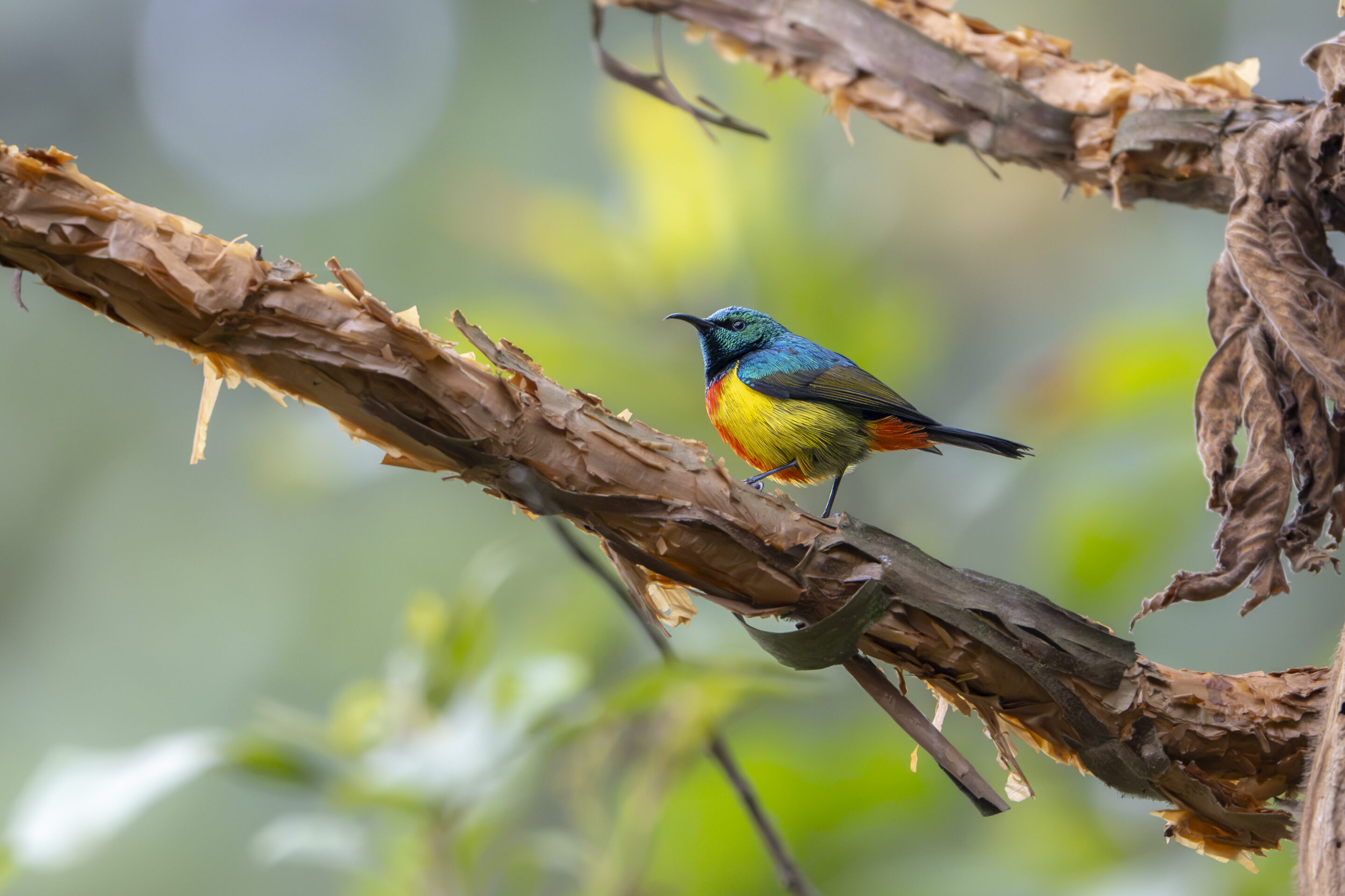
Regal Sunbird, Echuya Central Forest Reserve
There is only one scientific record of the Itombwe Nightjar (a 1955 specimen); a mere handful of the Itombwe Owl; and few, if any, photographs of several other free-roaming species: Albertine Owlet, Chapin’s Mountain Babbler, Prigogine’s Greenbul, Grauer’s Cuckooshrike, Kabobo Apalis, Rockefeller’s Sunbird, and Shelley’s Crimsonwing. Ongoing regional conflicts in the eastern DRC, which make access virtually impossible, are the primary cause. Yet some, like the crimsonwing, one of the 'holy grails' of African bird photography, suffer that unfortunate mix of declining, isolated populations, extreme high-altitude habitats, and a shy temperament.
For as long as I can remember, I’ve been drawn to this arc of mysterious rainforest, isolated massifs, and high-altitude lakes.
Geographically, the physical rift stretches 1,400km from just north of Lake Albert, south through the eastern Democratic Republic of the Congo, Rwanda, and Burundi, down to the southern shores of Lake Tanganyika where Tanzania meets Zambia. A string of national parks - important refuges of Central-East African biodiversity - safeguards the region’s enigmatic wildlife.
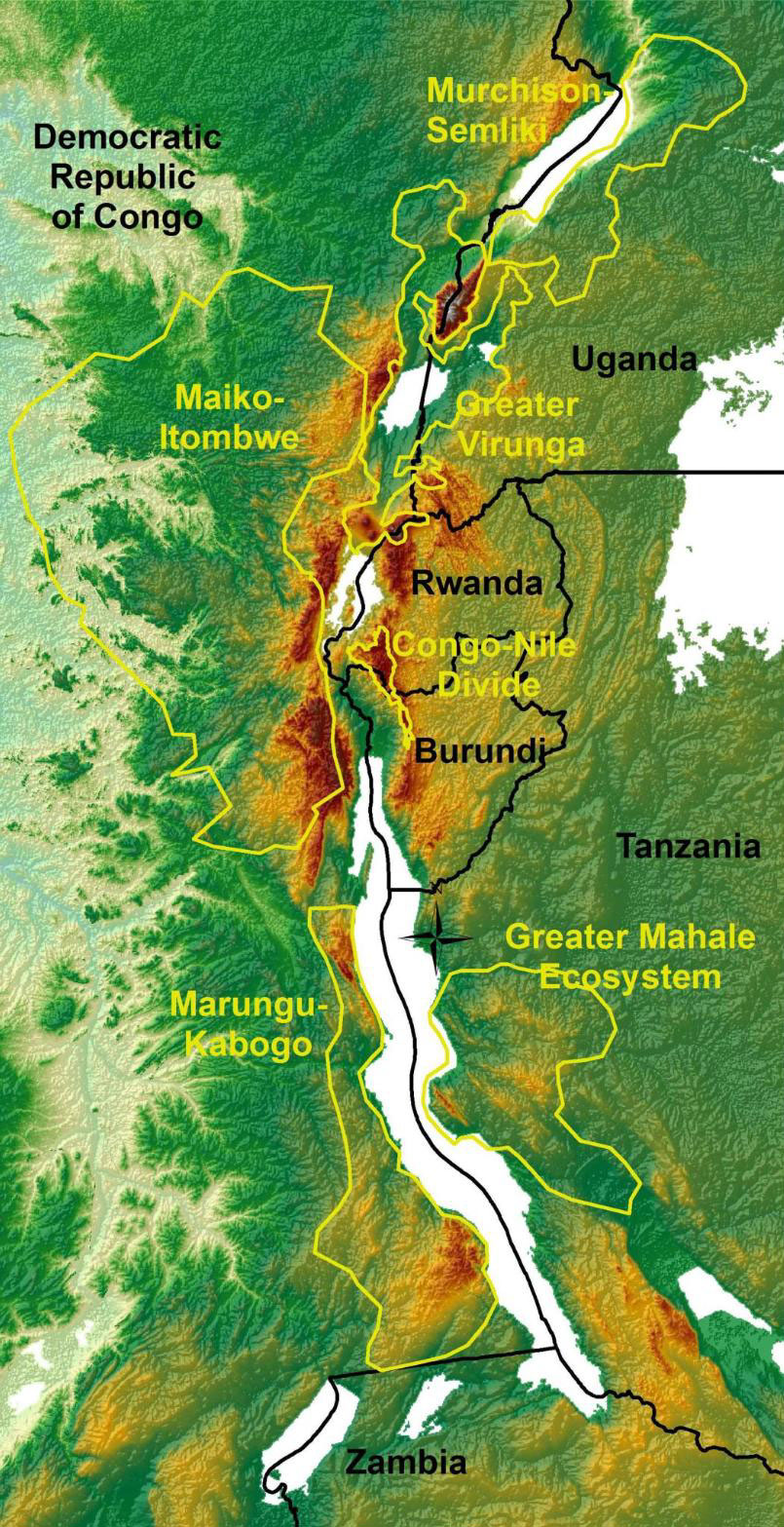
The Albertine Rift
But ornithologically, the Endemic Bird Area’s true boundaries are drawn by altitude. It is the isolated, forested massifs towering above 1,700 meters that define this endemism: the Rwenzori and Virunga Mountains, the Kahuzi-Biega highlands (where 30 of these endemics can be found), the little known Itombwe Massif, Nyungwe National Park’s Congo-Nile Divide, and Bwindi Impenetrable Forest.
These alluring names constantly prod me to plan excursions, nudging me to pack the Land Rover and head north.
Distinct species are marooned on these ecological islands in habitats that lower-elevation terrain struggles to connect.
To help bridge these gaps, the broader ecoregion incorporates mid- and low-altitude sanctuaries like Uganda’s Kibale and Semuliki National Parks. They link the elevated bands of endemism, hosting a precious few of the 35 endemics: the altitudinal migrators.
Species adapt differently to the Rift’s vertical architecture. The Rwenzori Turaco and Regal Sunbird are trapped on their cloud-forest islands, unable to survive a lowland crossing. Meanwhile, altitudinal generalists like the Dwarf Honeyguide and Blue-headed Sunbird breed high but descend the escarpments to feed low. Conserving the entire vertical gradient, from the hot valley floors to the cooler misty peaks, is the only way to ensure their survival.
A friend’s decennial birthday, coupled with his dream to see the mountain gorillas, was the perfect excuse I needed to expand my gallery of Albertine Rift endemics and other avian treasures. It’s a few hours’ drive from Rwanda’s capital to the border and across to Kisoro, the launchpad to Uganda’s slice of the Virungas.
Towering 3,669 meters high, Mount Sabinyo looms over the three countries’ adjoining reserves.
Photographing birds on the Rwandan side (Volcanoes National Park) is difficult, as visitors must remain tethered to guided group nature walks, and it is outright impossible in the DRC’s Virunga National Park due to ongoing conflicts.
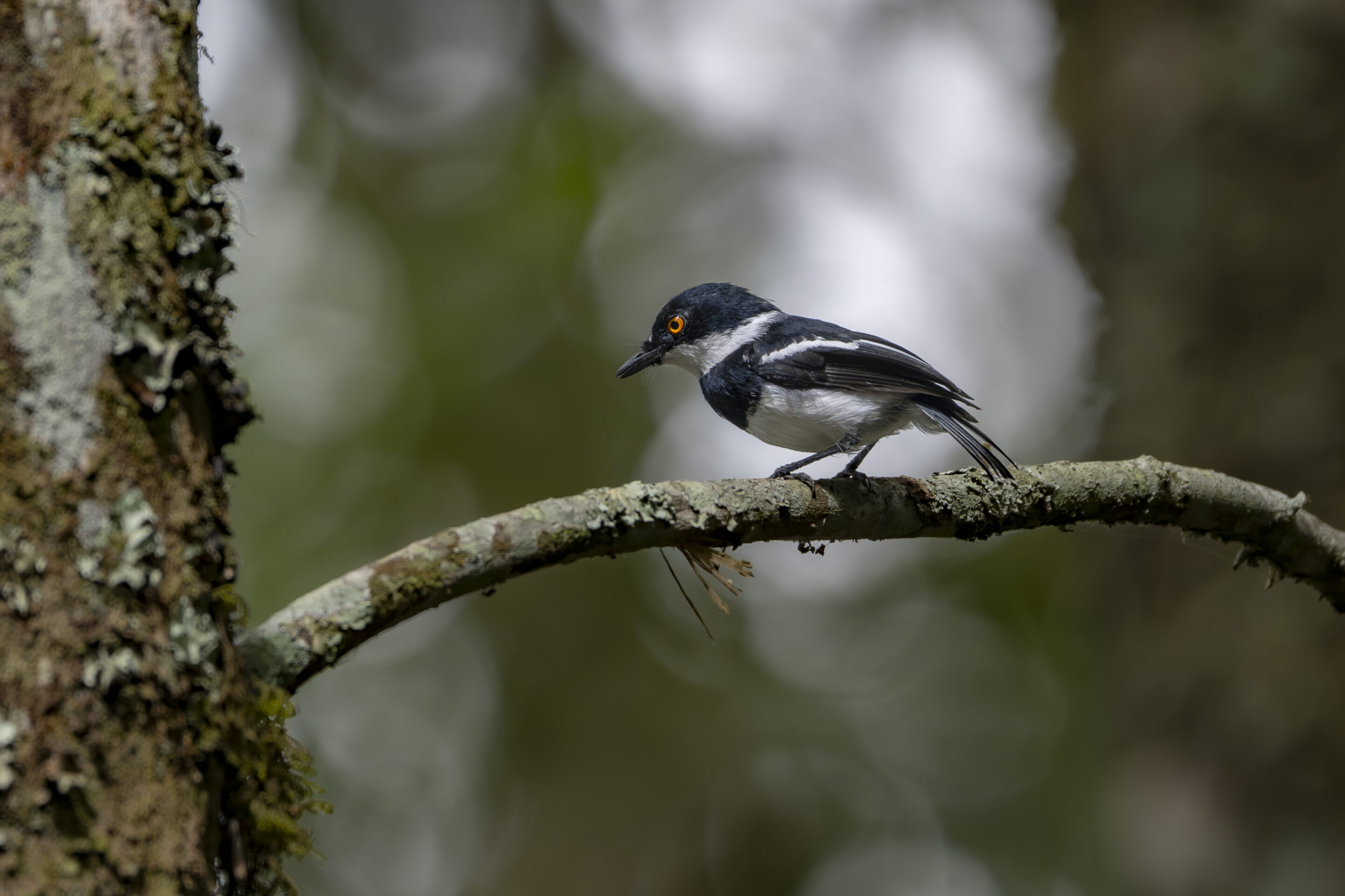
Rwenzori Batis, Nyungwe National Park
To pin down some of the massif’s specialties, our best bet was to hike up Sabinyo Gorge, starting at the park gate, after a briefing by a ranger-guide. Matthew Kajunga (Cisticola Birding), with whom I spent almost three weeks last year exploring western Uganda, kindly agreed to guide us in his neck of the woods.
The distinctive call of an Archer’s Ground Robin kickstarted our tally; it eventually followed through, reluctantly, granting us a brief glimpse. Further up the trail, a fast-moving bird party delivered Rwenzori and Mountain Masked Apalises - tiny, hyperactive, but thankfully more confiding than the ground robin. Nearby, an Albertine Sooty Boubou called, also demanding that its admirers put in some time before showing itself. These stubborn personalities would play out again in Rwanda's Nyungwe National Park a week later.
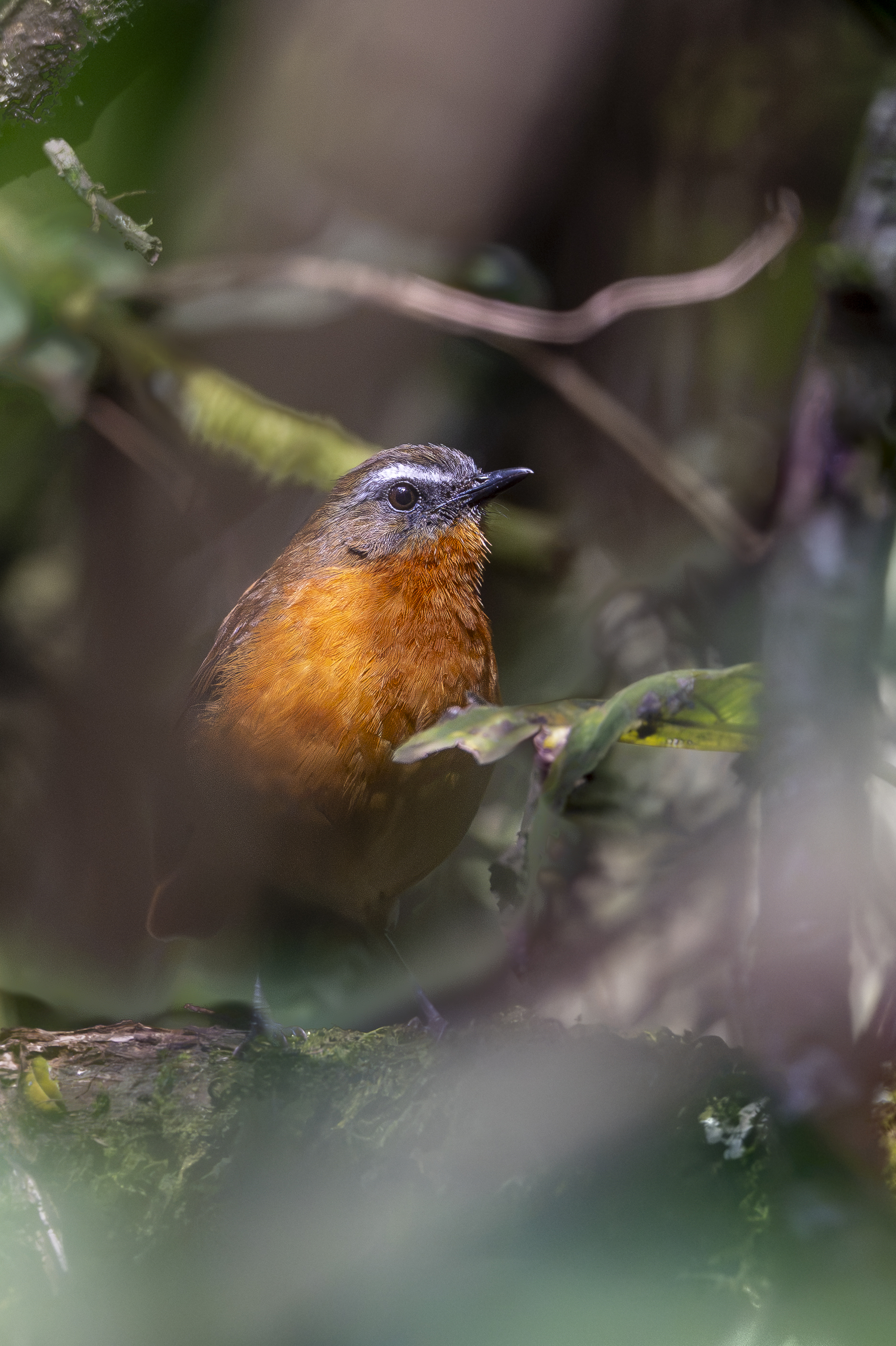
Archer’s Ground Robin, Mgahinga Gorilla National Park
We chanced upon our first Red-faced Woodland Warbler, another frantic mid-canopy forager, and a small flock of quarrelsome Stripe-breasted Tits. Halfway up the gorge, a Handsome Spurfowl called loudly before promptly dashing into the undergrowth. I rolled my eyes, reminding myself that I had knowingly signed up to photograph forest birds.
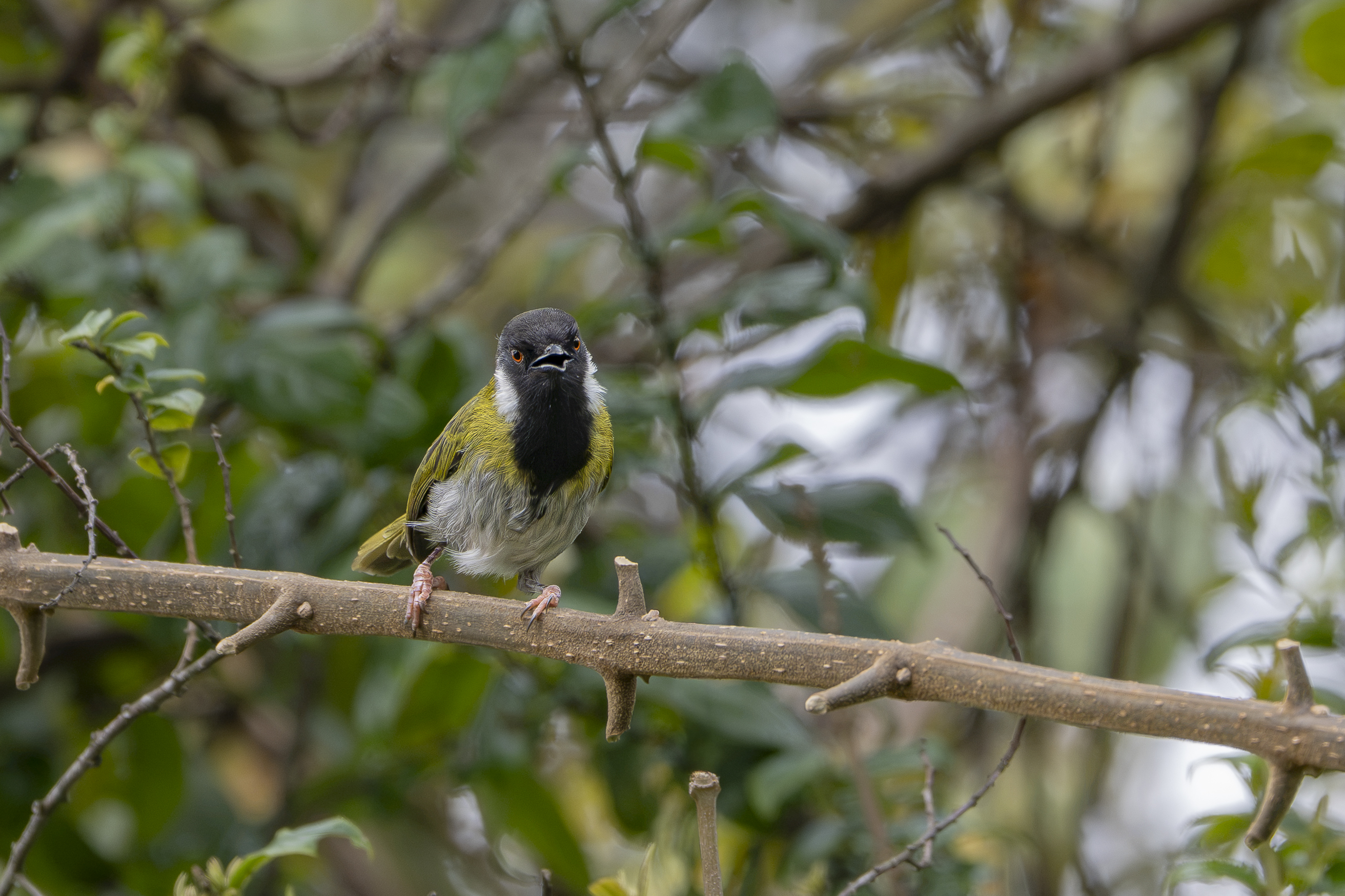
Mountain Masked Apalis, Mgahinga Gorilla NP
Higher up on the bamboo forest boardwalks, our first Rwenzori Turaco stunned us with a brief flyby. Its static plumage is a mesmerising patchwork of brilliant colours - assuming you can find it, often high in the canopy.
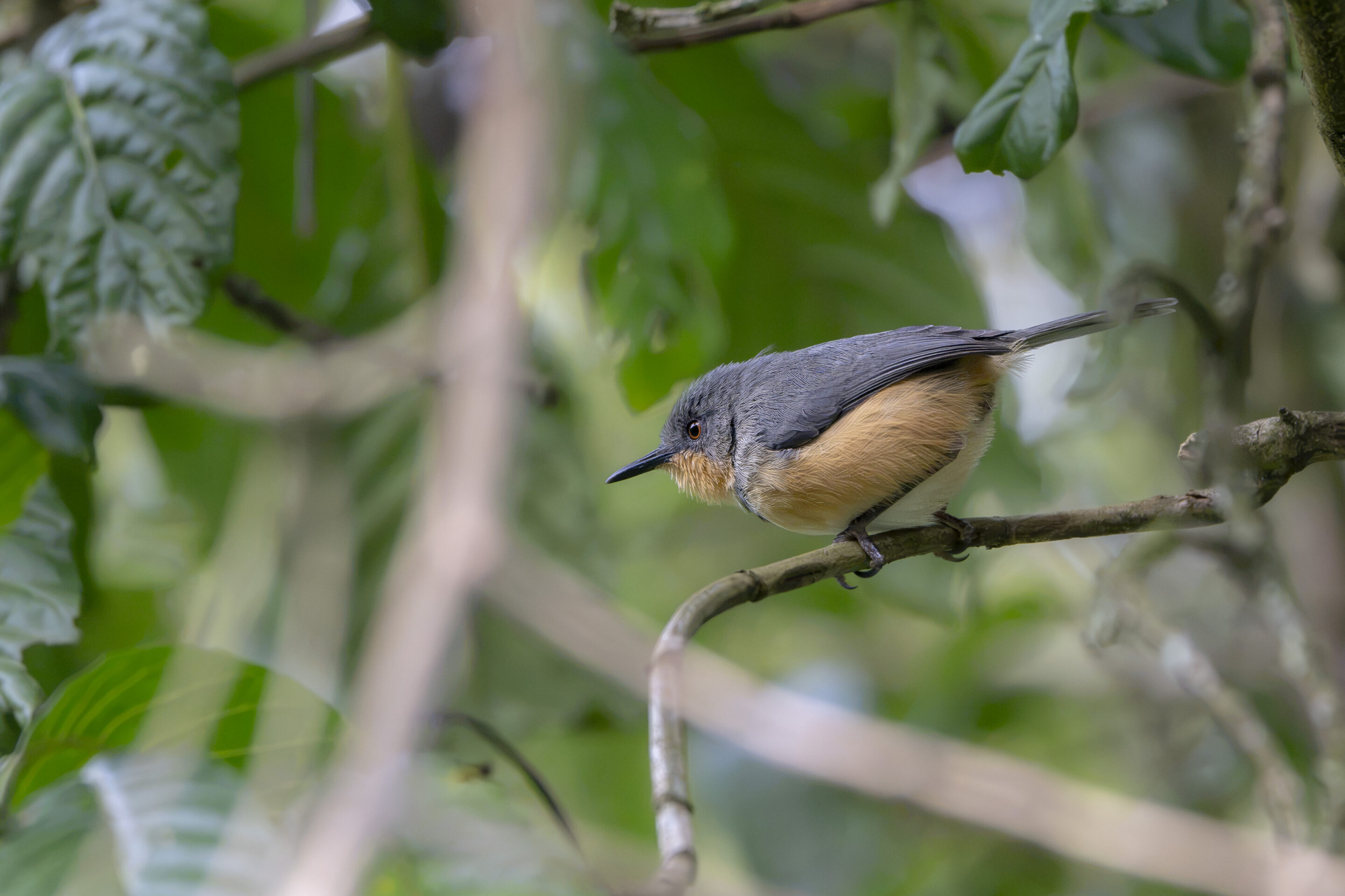
Rwenzori Apalis, Mgahinga Gorilla NP
With the following afternoon free after our morning gorilla excursion, Matthew and I drove east up a long, steep pass to the Echuya Central Forest Reserve for some roadside birding. It is a worthwhile 30-minute drive from Kisoro. The sudden contrast from heavily cultivated terraces and bustling villages to unspoiled Afromontane forest as you crest the high pass is staggering. Though the road is busy with heavy vehicles to and from distant Kampala, it is well worth stopping every few hundred metres to watch and listen. A spectacular Regal Sunbird and a diminutive Rwenzori Batis raised my endemic photo tally to seven. An uncooperative Strange Weaver put the seen-and-heard list at eleven. Just three days in Uganda’s southwest corner had revealed almost a third of the region's celebrities.
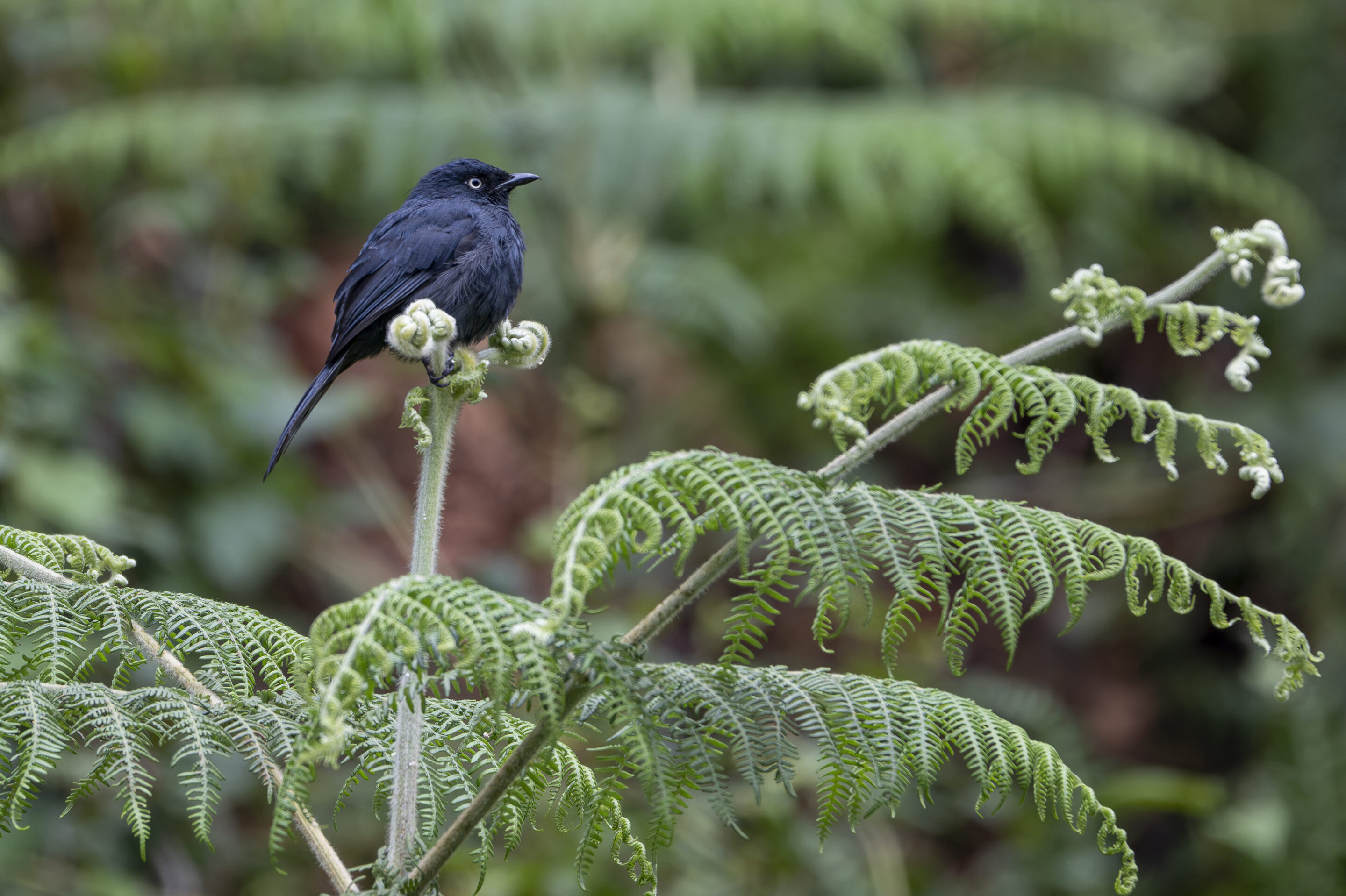
Yellow-eyed Black Flycatcher, Nyungwe NP
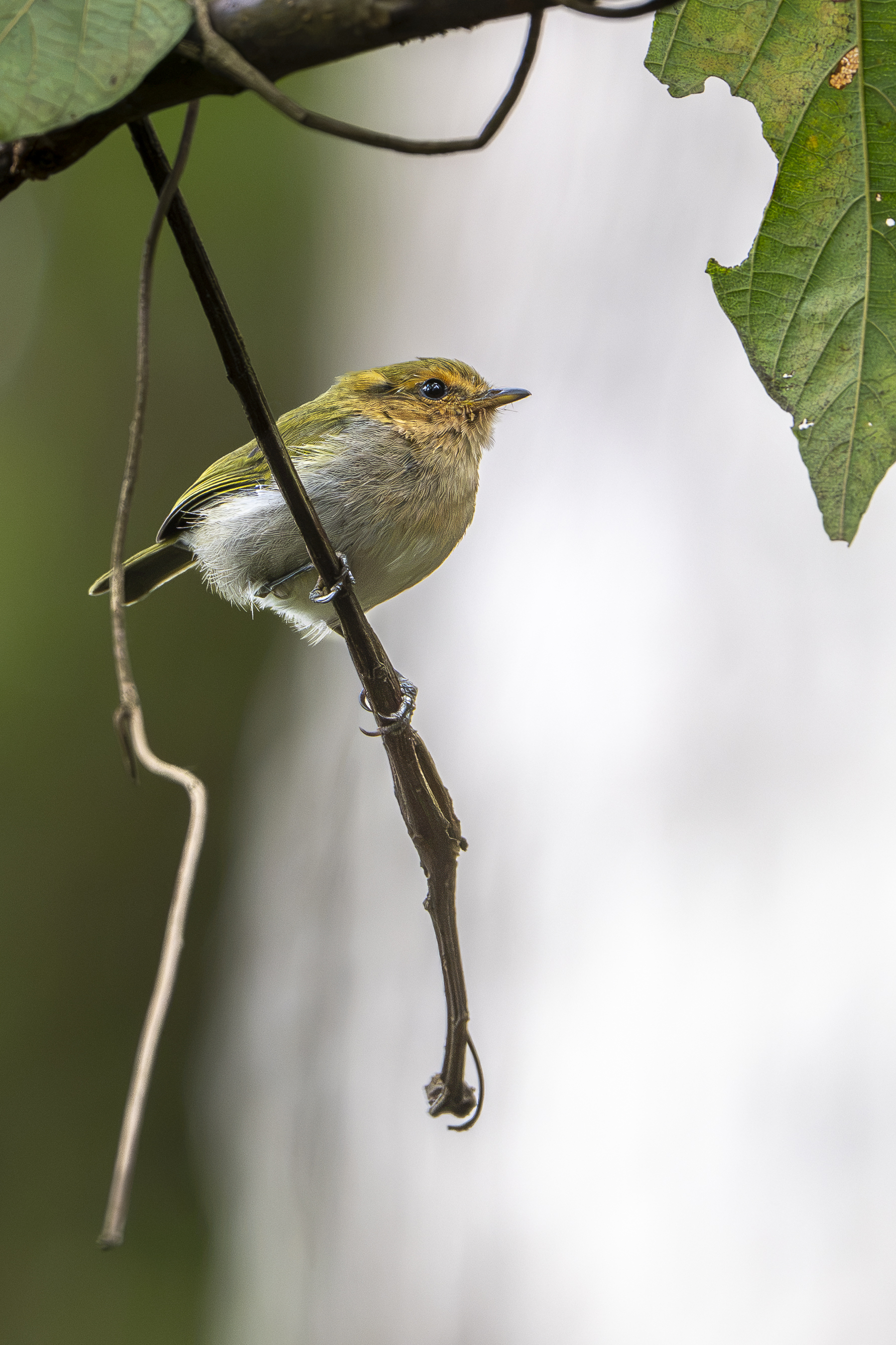
Red-faced Woodland Warbler, Mgahinga Gorilla NP
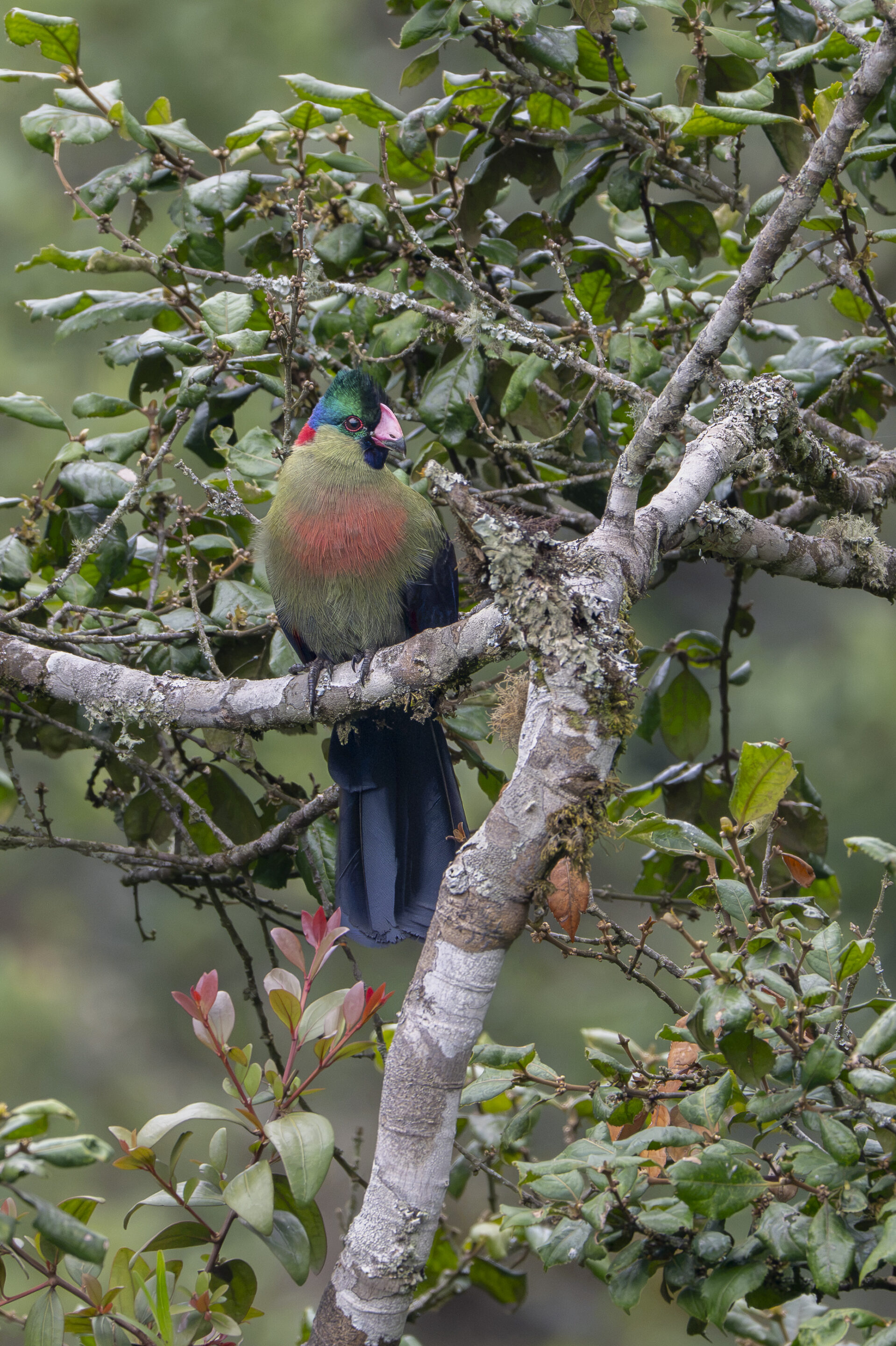
Rwenzori Turaco, Nyungwe NP
If it weren’t for a disjunct, isolated population 2,500 kilometres away near Mount Cameroon, the Rwenzori Hill Babbler would have made it twelve. Almost a rift endemic, it’s a reminder of the ancient, unbroken montane forests that once spanned the entire waist of Africa before climate shifts left the species high and wet on two distant mountain islands.
Back in Rwanda, I spent a morning with Joseph Desire Dufitumukiza, a guide from Musanze and a member of the Rugezi Ornithology Centre - an NGO promoting conservation and avitourism. Our main target was Grauer’s Swamp Warbler, a threatened endemic locked into dwindling high-altitude wetlands. Joseph suggested Lake Bihinga, a 30-minute drive towards Gisenyi. Previous attempts in Nyungwe’s Kamiranzovu Swamp had lowered my expectations of getting an image. Would one show, or keep me squelching through the reeds?
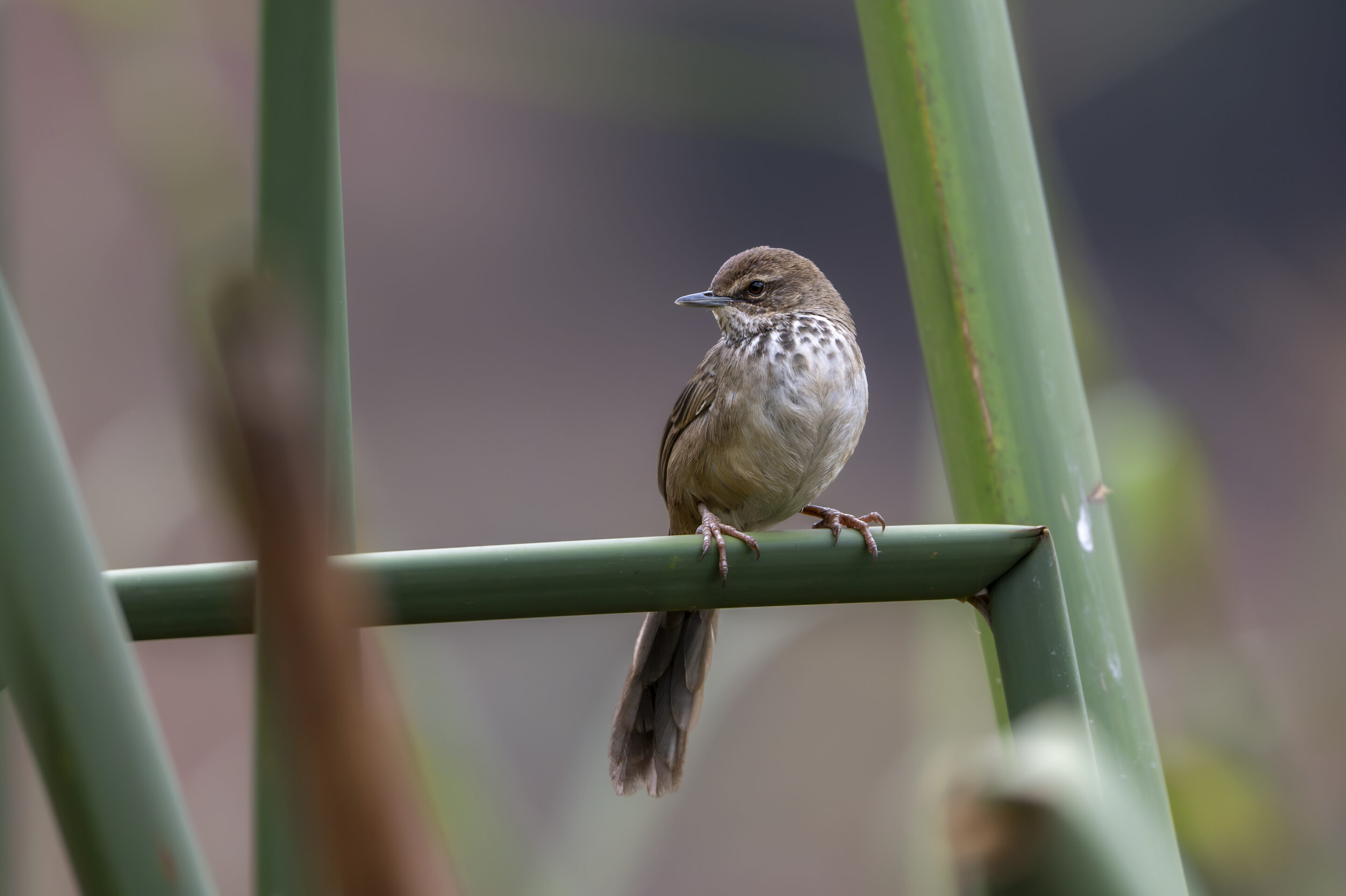
Grauer’s Swamp Warbler, Lake Bihinga
As luck would have it, our third swamp warbler stepped up to the plate and put on a magnificent performance, providing my most-coveted photograph of the trip. Not to be outdone, its distant, similar-looking cousin and an equally elusive skulker, the Highland Rush Warbler, put in an almost equally impressive show. Thank you, Joseph!
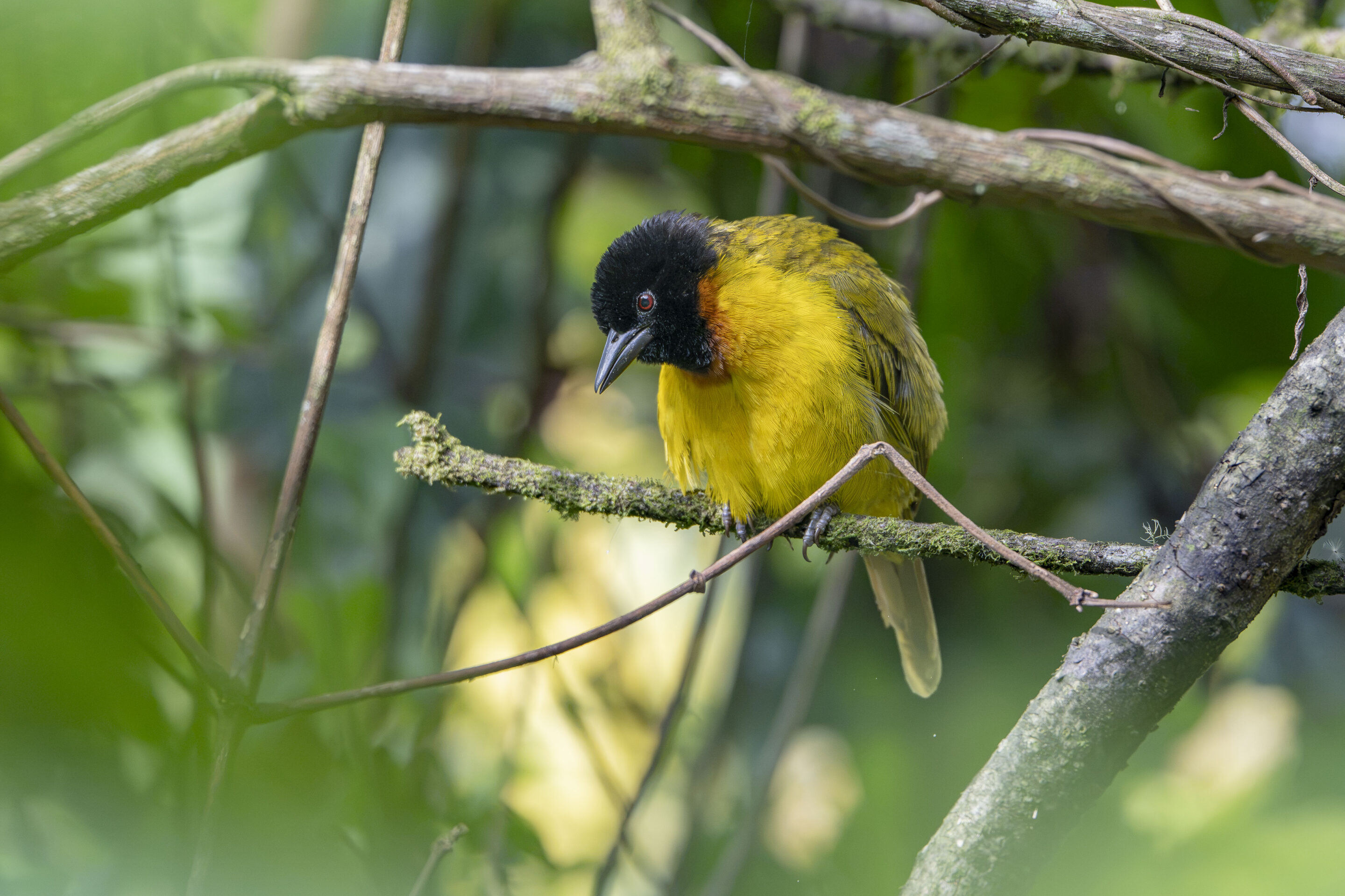
Strange Weaver, Nyungwe NP
The road south meanders along the picturesque shores and cultivated hillsides of Lake Kivu. Gishwati-Mukura National Park is a newly restored montane forest reserve that bridges the habitat gap between Volcanoes and Nyungwe. It is Rwanda’s third Albertine Rift national park - though unfortunately, not one we had set aside time to explore. Another good reason to return.
If, like me, you want to fully immerse yourself in photographing the region’s endemics, Nyungwe must be your focal point. I would dedicate at least four days strictly to birding its pristine indigenous forests and high-altitude wetlands. You could easily add another two or three days to trek to the chimpanzees, admire Africa's largest troop of Angola colobus (numbering over 600), or experience the canopy walkway. The park also boasts spectacular waterfalls and rugged trails leading up to its highest peak at 2,950 meters. Ultimately, this 100,000-hectare wilderness safeguards 14 primates, over 70 other mammal species, more than 300 birds, and well over 1,000 plant species.
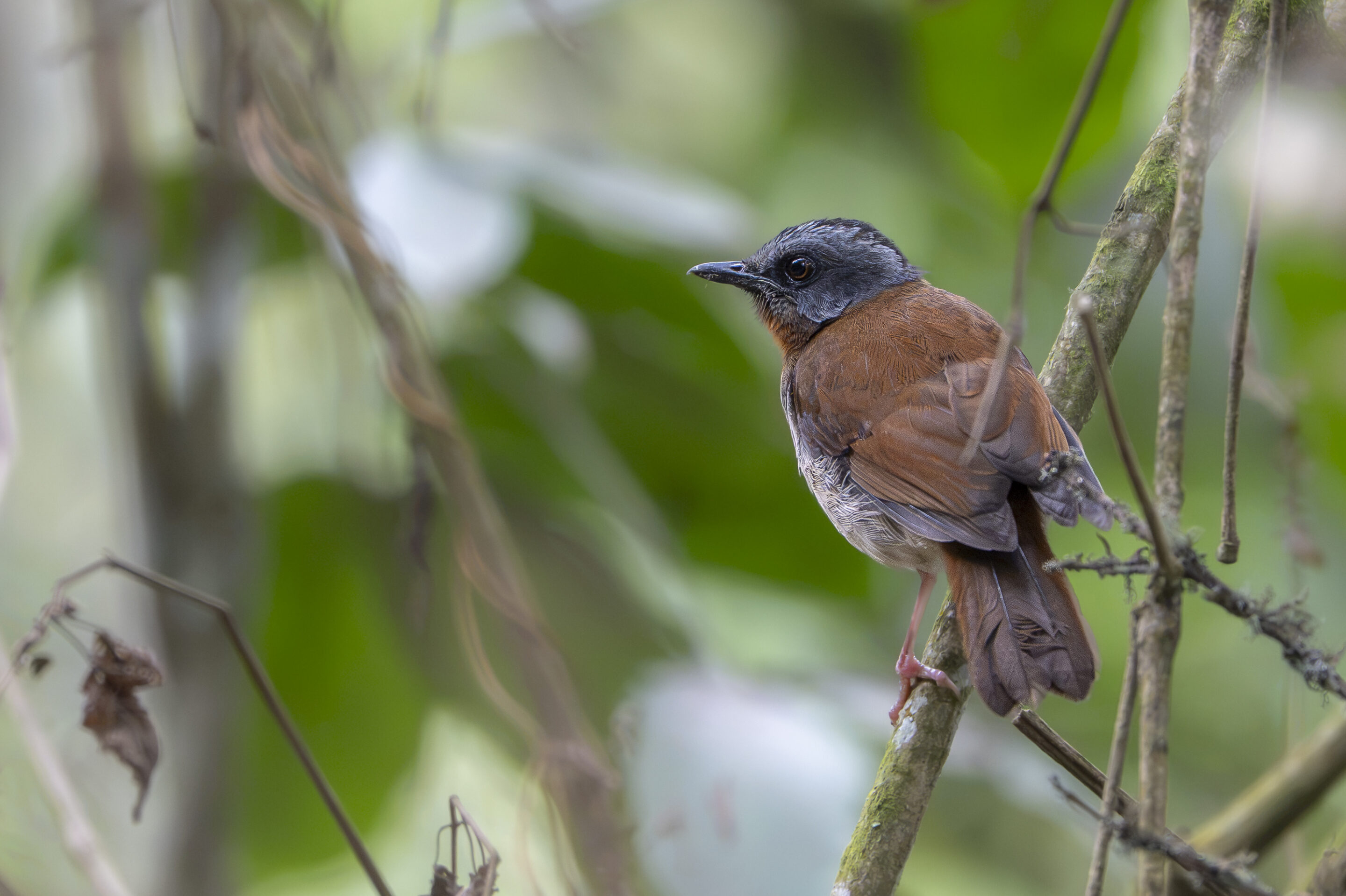
Red-throated Alethe, Nyungwe NP
My first addition to the gallery was a Yellow-eyed Black Flycatcher, one of the more common endemics, followed an hour later by an image of the camera-shy Rwenzori Turaco. A distant, Purple-breasted Sunbird proved a bridge too far, even at the 600mm end of my lens’s zoom.
We were now in the very capable hands of Rwanda’s preeminent birding guide, Claver Ntoyinkima. A senior ranger-guide and trainer at the park whose conservation efforts span over two decades, Claver received the 2024 Tusk Wildlife Ranger Award in recognition of his anti-poaching work, primate habituation, and community education initiatives. I met this humble, passionate gentleman four years ago and made sure to book him well in advance for these five days. I couldn’t find a tree whose Latin name he didn’t know; he is a walking encyclopaedia on butterflies, mammals, and plants, though birds remain his favourite.
Claver was my antidote to the law of diminishing marginal returns. While that law stubbornly sought longer and longer periods between new additions, his eyes and ears didn’t miss a sound or fleeting shadow. He knew exactly where to look, faced with a dwindling list of outstanding endemics.
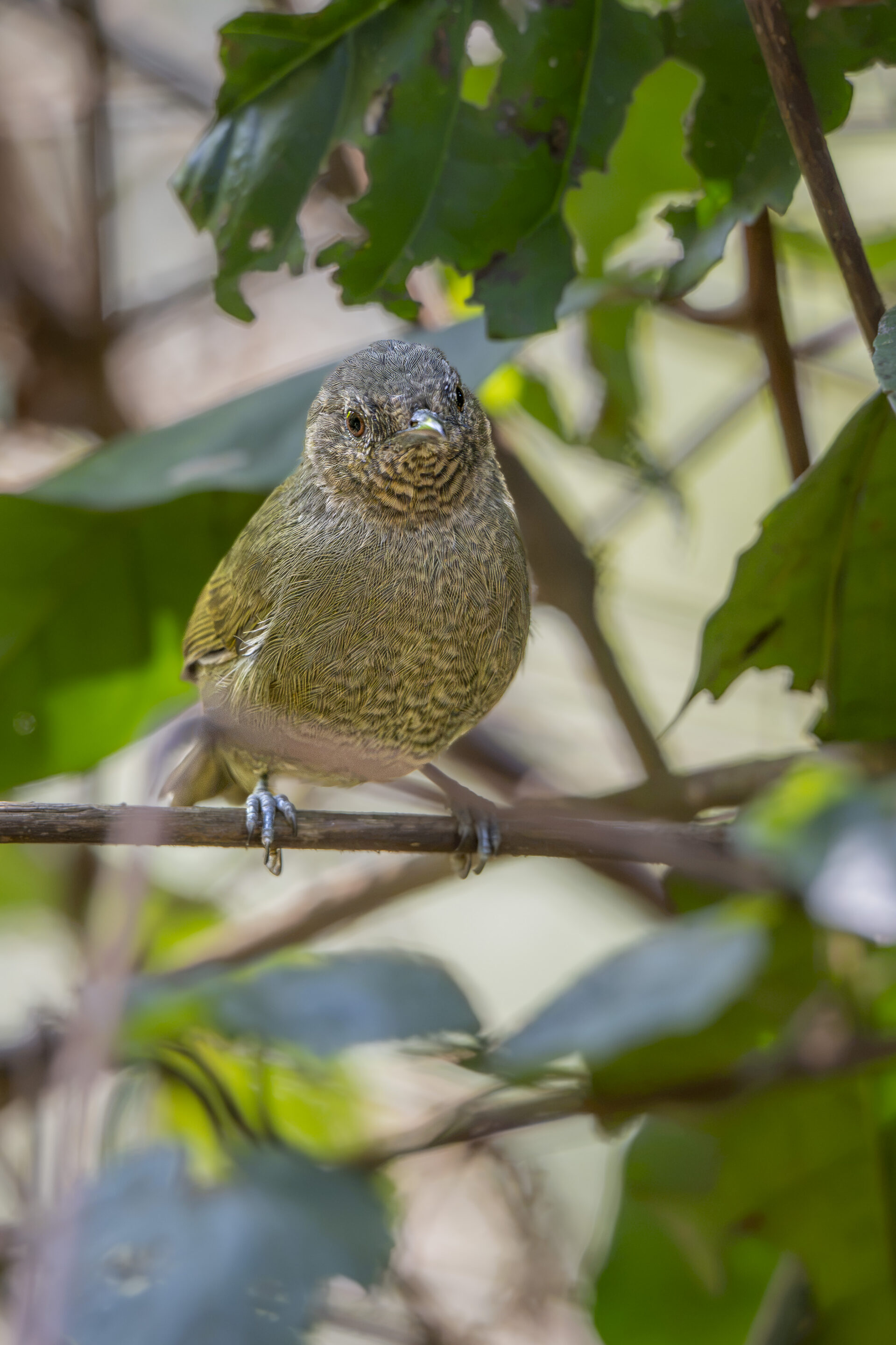
Grauer’s Warbler, Nyungwe NP
The trail to Ndambarare Waterfall rewarded us aplenty. First up, an accommodating pair of Grauer’s Warblers - usually shy thicket inhabitants - followed soon after by a pair of Neumann’s Warblers hopping along the dark forest floor, frustratingly impossible to capture. The localized and poorly known Kungwe Apalis was the day’s ultimate highlight, posing just long enough to grace my camera’s display and cementing a much-appreciated record.
Another day, hiking out from the Uwinka Reception Centre in the heart of the high forest, delivered good sightings of the exquisite Rwenzori Double-collared and Blue-headed Sunbirds. As dusk approached, some roadside birding presented us with a prized Willard’s Sooty Boubou and, finally, the oft seen but uncooperative Strange Weaver.
Claver still had a few tricks up his sleeve for our final day. We hiked the historic Huye–Rusizi Road which bisects the park, now serving as the perfect birding trail. We started with an obliging Red-throated Alethe, but the day’s targets were two endemics we had yet to see. One we’d heard, and as if on cue, the krrak-kreek call of a Handsome Spurfowl echoed up the trail ahead. We waited patiently for it to cross my viewfinder, but when it did, it left only a grey blur. Next time...
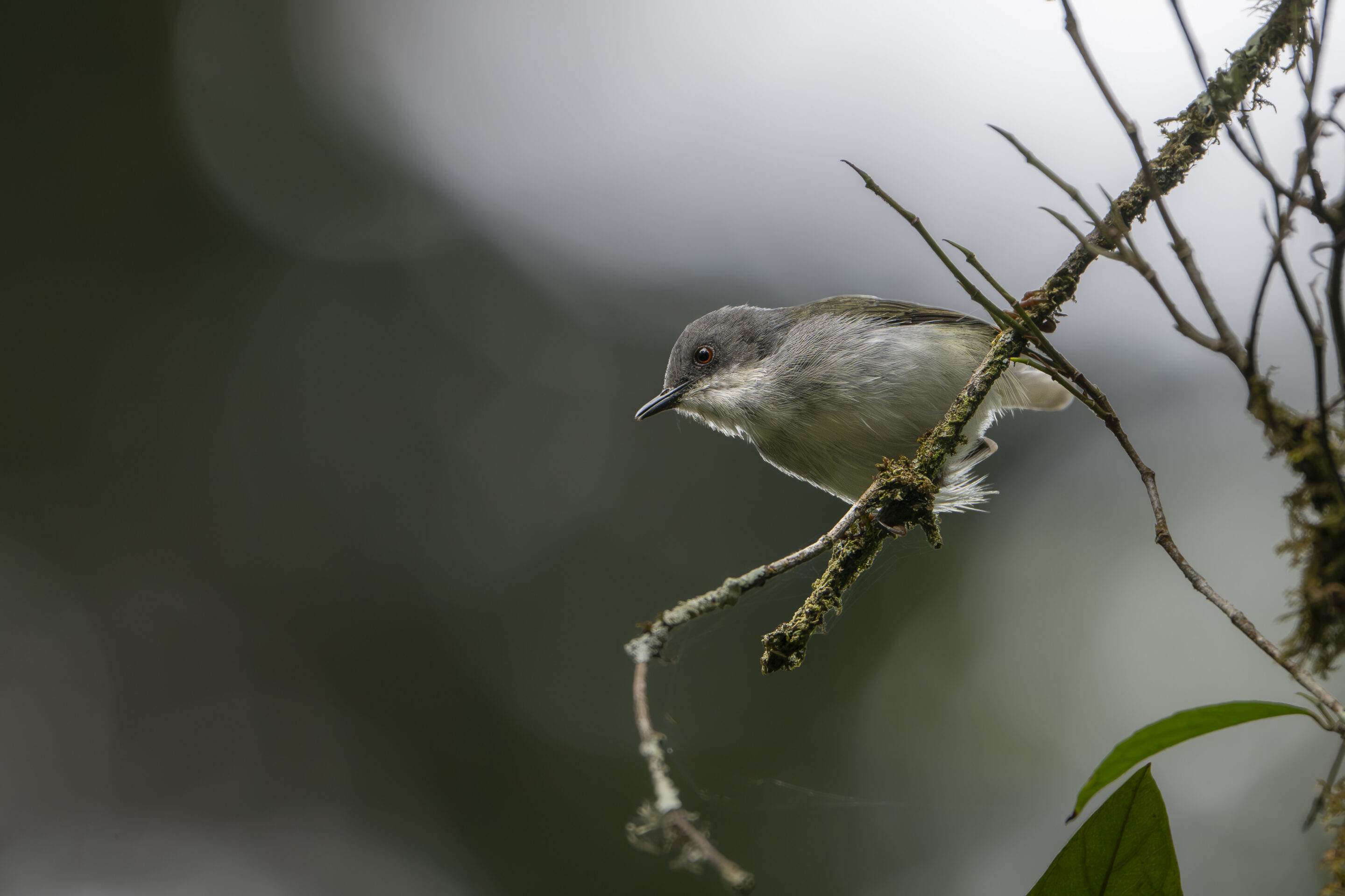
Kungwe Apalis, Nyungwe NP
Far more accommodating, thanks to Claver’s incredible ear, was a small flock of Red-collared Babblers that kindly responded to his mimicking.
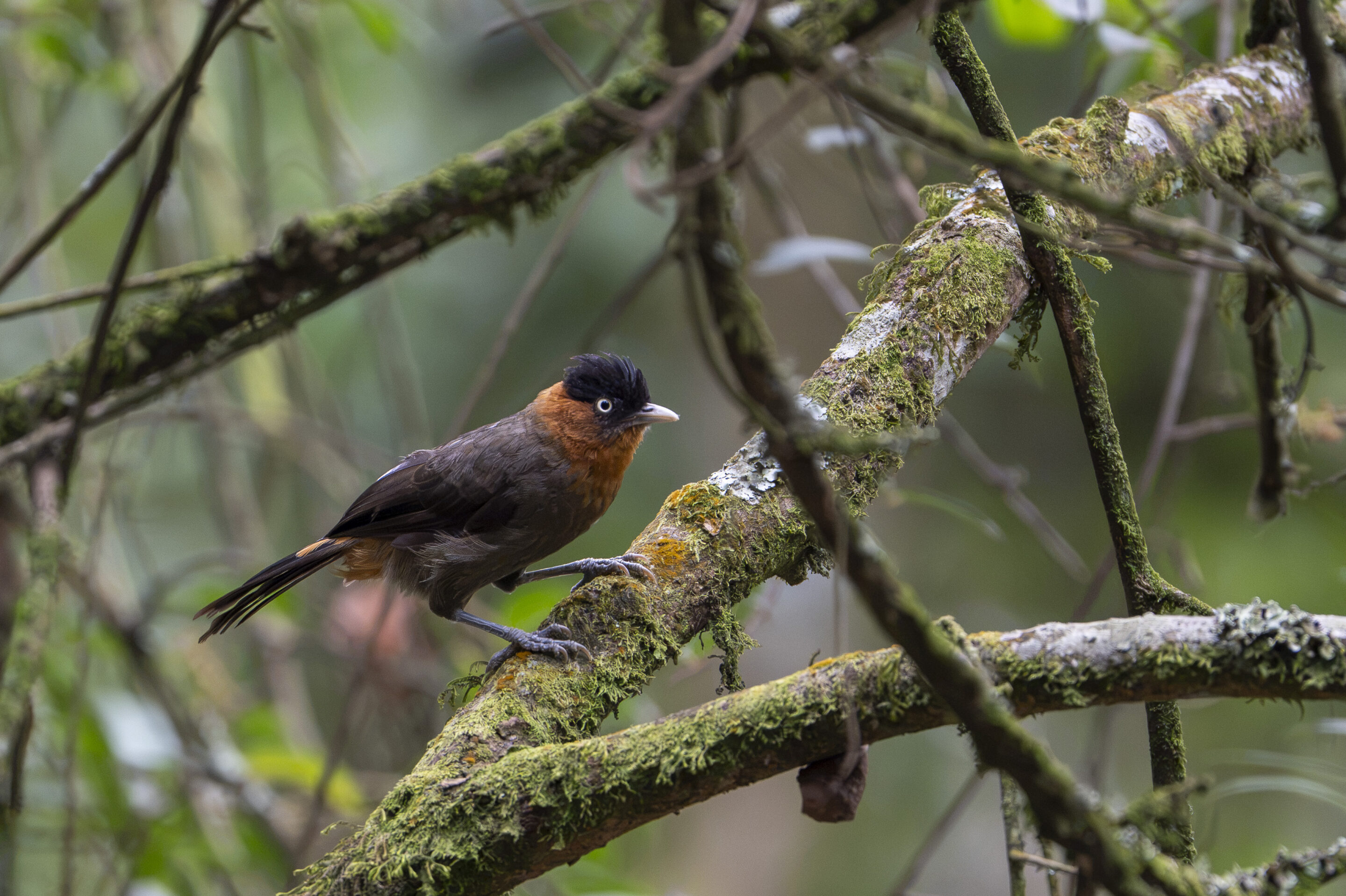
Red-collared Babbler, Nyungwe NP
On our way back, we heard another spurfowl. Claver looked at me questioningly. I’d come too far not to try one last time. Poised with a wider frame, my focus-and-trigger fingers starting to cramp, I watched as the spurfowl burst across the path. Thank goodness for high frames per second!
Nyungwe had lifted my result to 18 endemics captured and another four seen - a triumph born entirely of Claver’s extraordinary talents.

Handsome Spurfowl, Nyungwe NP
Home, pictures processed, I’m already contemplating my next visit to this enchanted rift. How to pin the four I missed and the four I’ve yet to see to my portfolio? Here’s what I’m thinking:
Nyungwe National Park
The Dusky Crimsonwing would be a massive coup; its deep charcoal belly spectacularly offset by brilliant bursts of crimson across its face and wings. Though widespread, it is a master of disguise - much like the Albertine Boubou, which will require patience to freeze it in the shadows. I need a rematch with two breathtaking canopy jewels: the Purple-breasted and Blue-headed Sunbirds, and I hope to cross paths again with a slightly less shy pair of Neumann’s Warblers as they wander up a forest stream’s edge.
Bwindi Impenetrable National Park
The non-descript, canopy-dwelling Dwarf Honeyguide is perhaps the toughest target on my shortlist. I’ll aim for the June to August window when the legendary Grauer’s Broadbill breeds near Mubwindi Swamp, and the scarce, drab Chapin’s Flycatcher joins mixed-species foraging parties. And if the stars align, a wayward Shelley’s Crimsonwing might just appear out of the shadows. Someone has to capture that elusive first photograph.
And More
The Albertine Rift is home to hundreds of magnificent birds that are difficult to access anywhere else in Africa. When strict endemics eluded me, the forest gifted me many others: Rwenzori Hill Babbler (a Sylviid warbler actually), Elliot’s Woodpecker, Equatorial Akalat, Bar-tailed Trogon, Doherty’s Bushshrike, Mountain Illadopsis, Black-faced Rufous Warbler, and Stuhlmann’s Starling. Two weeks had shown me almost 200 birds.
Here are a few of my non-rift-endemic favourites from those misty mountains.
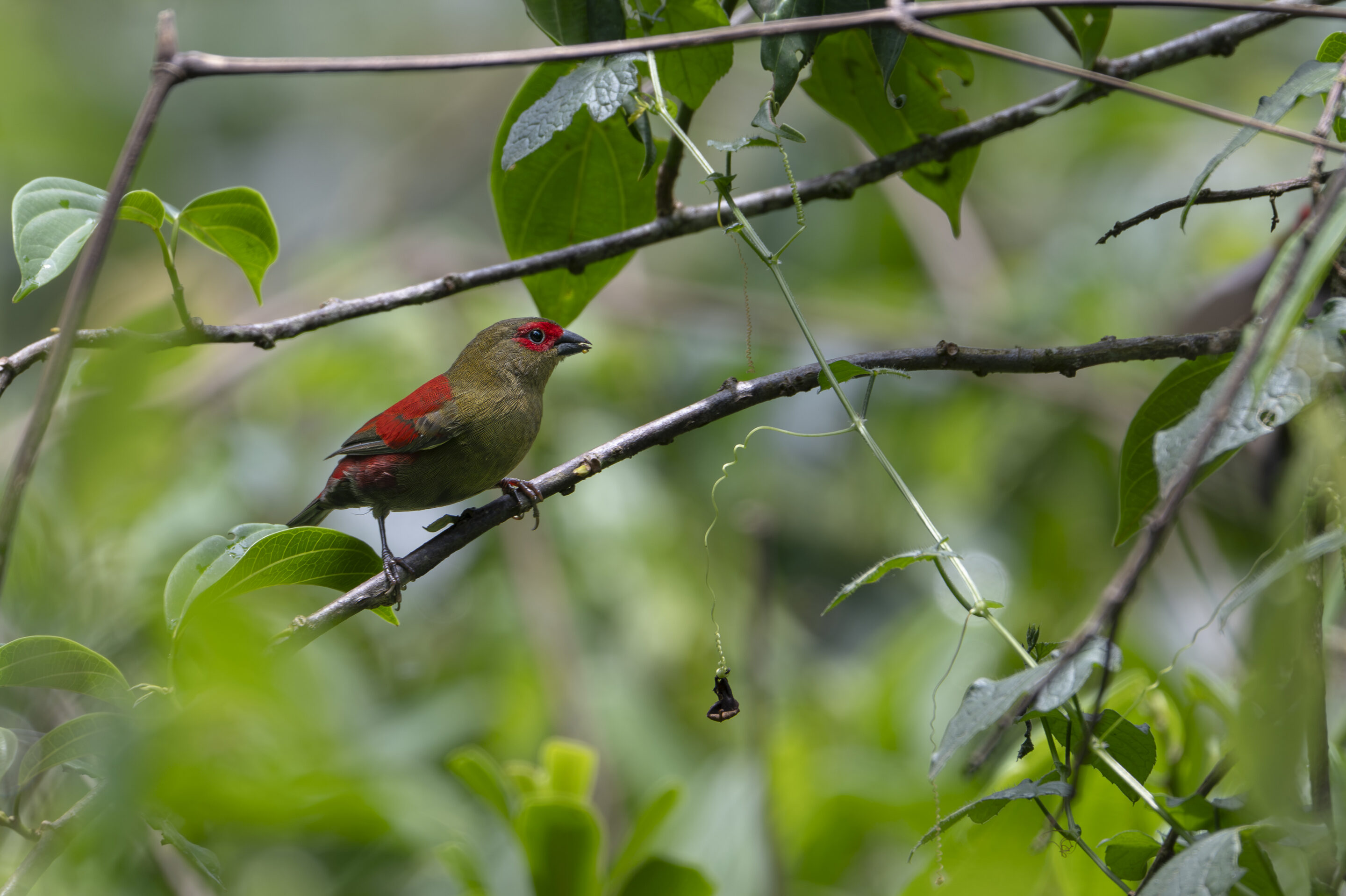
Red-faced Crimsonwing, Nyungwe NP
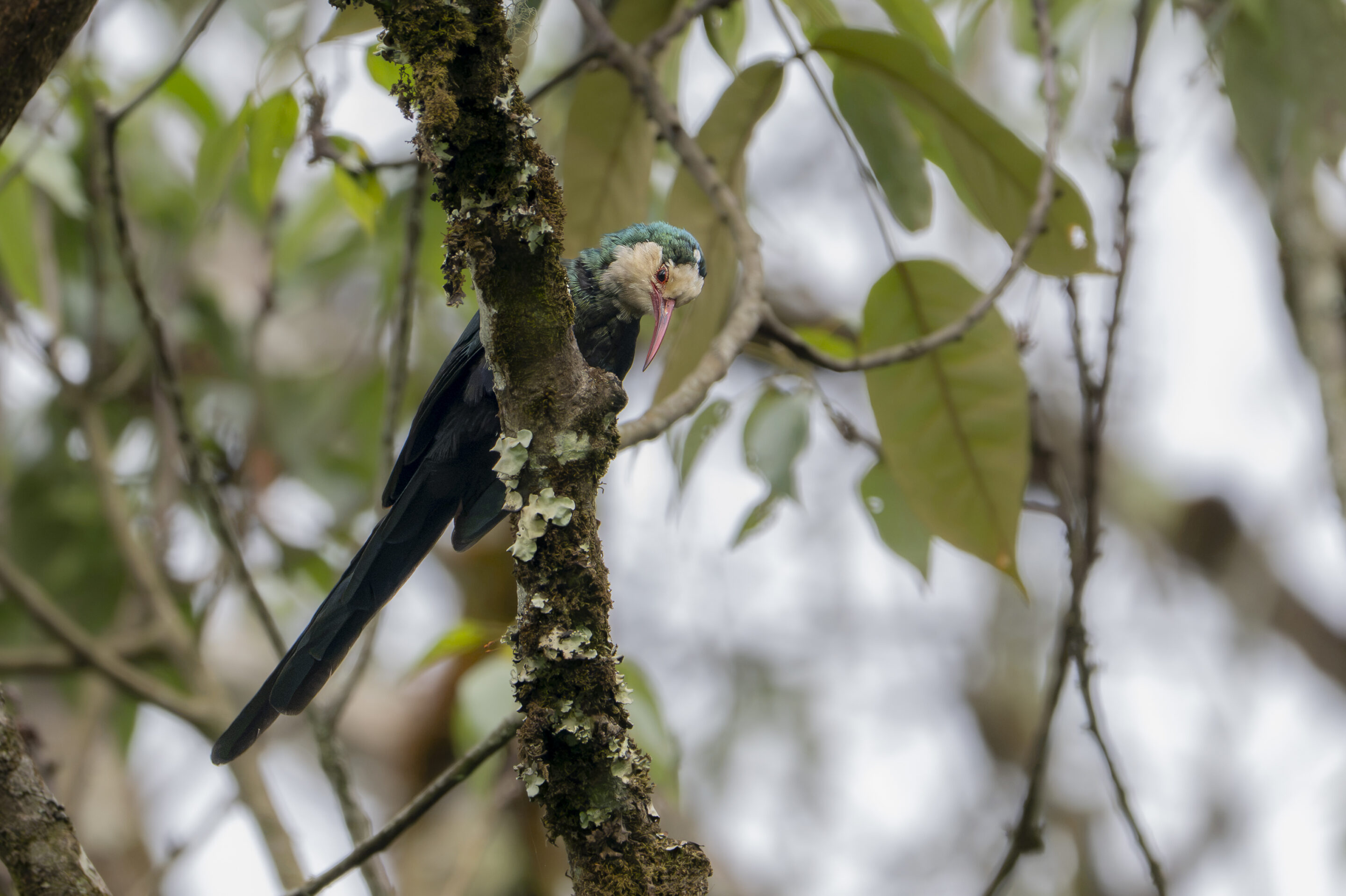
White-headed Wood Hoopoe, Nyungwe NP
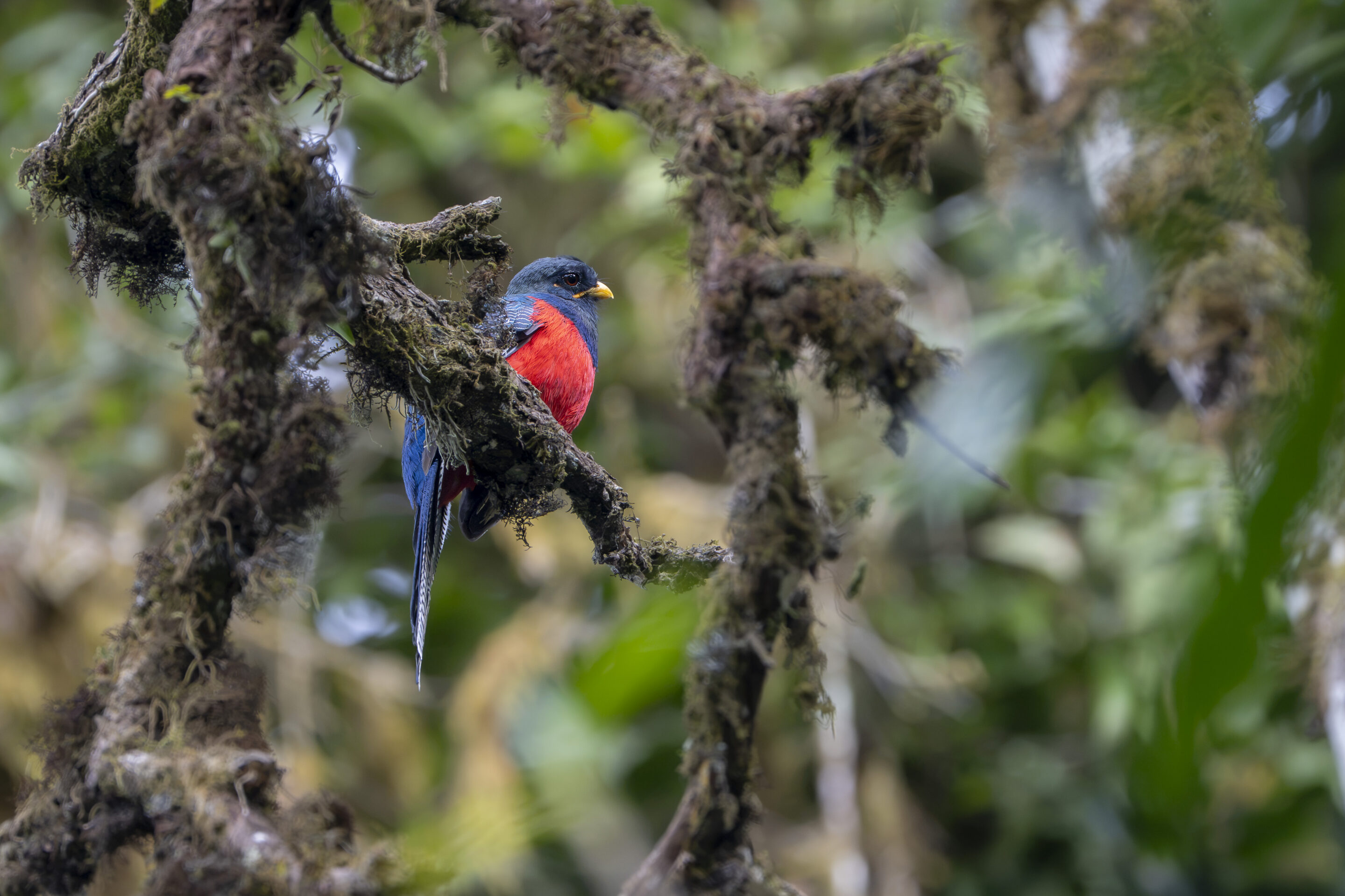
Bar-tailed Trogon, Nyungwe NP
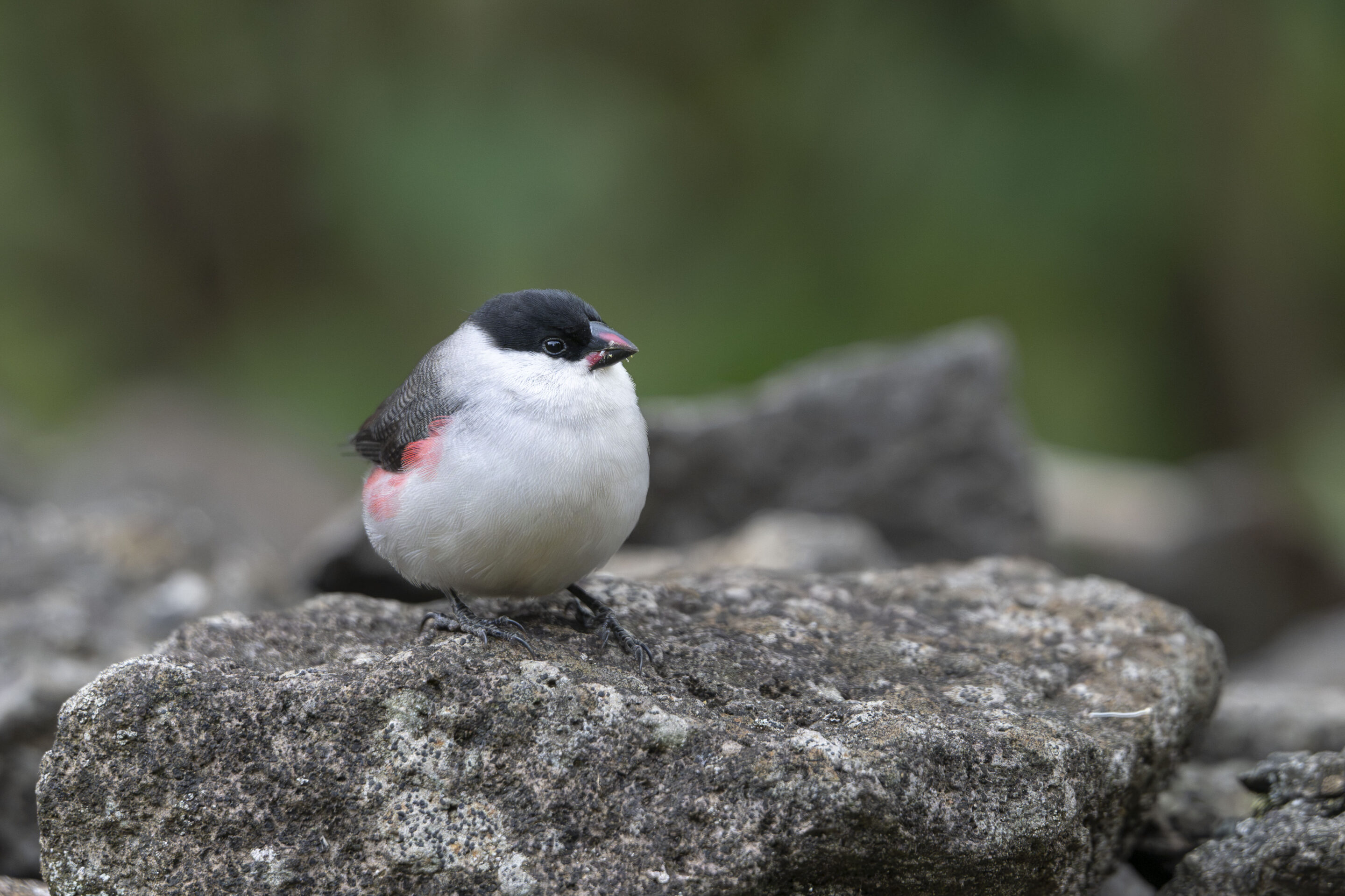
Black-crowned Waxbill, Mgahinga Gorilla NP
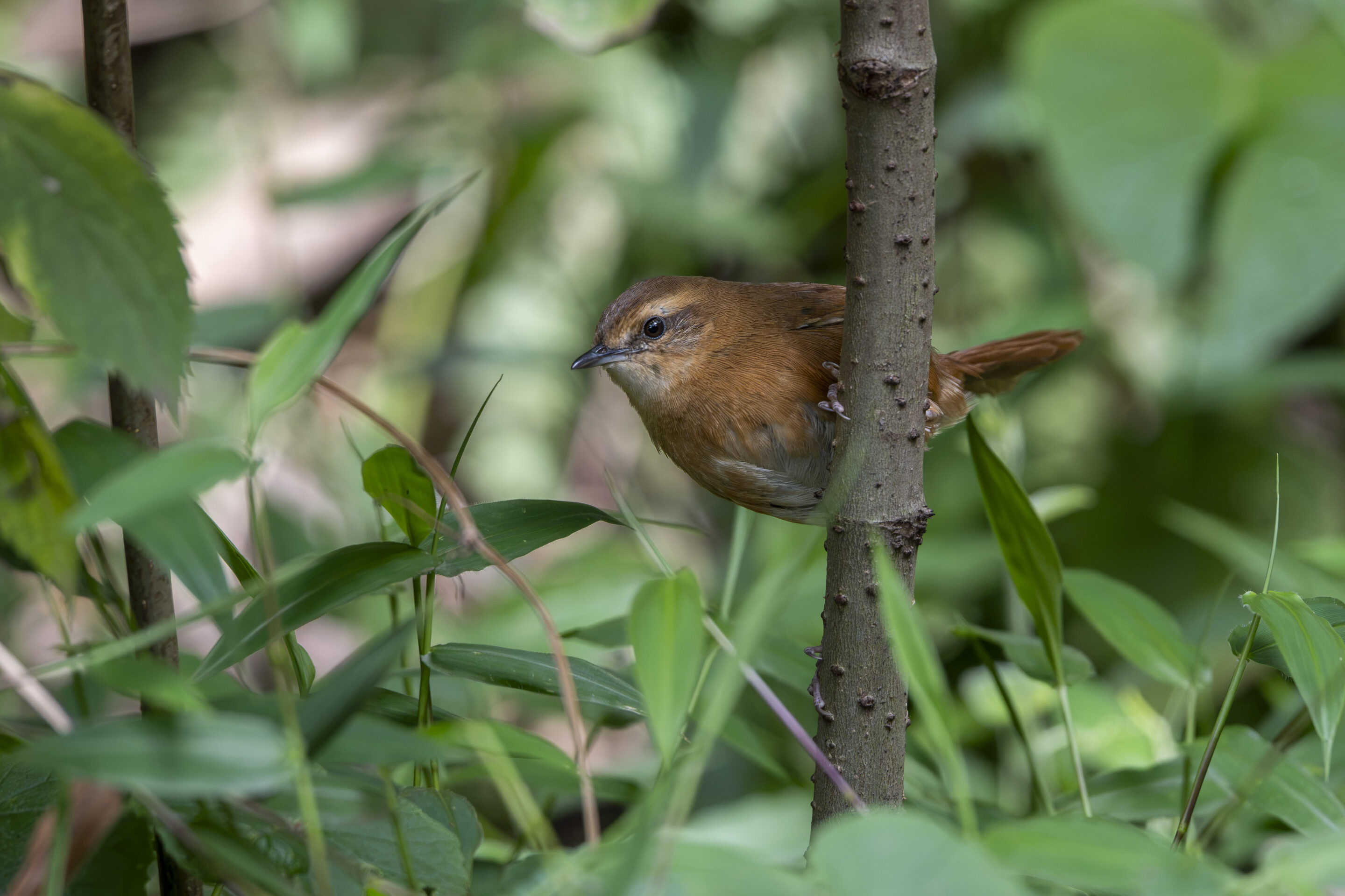
Cinnamon Bracken Warbler, Mgahinga Gorilla NP
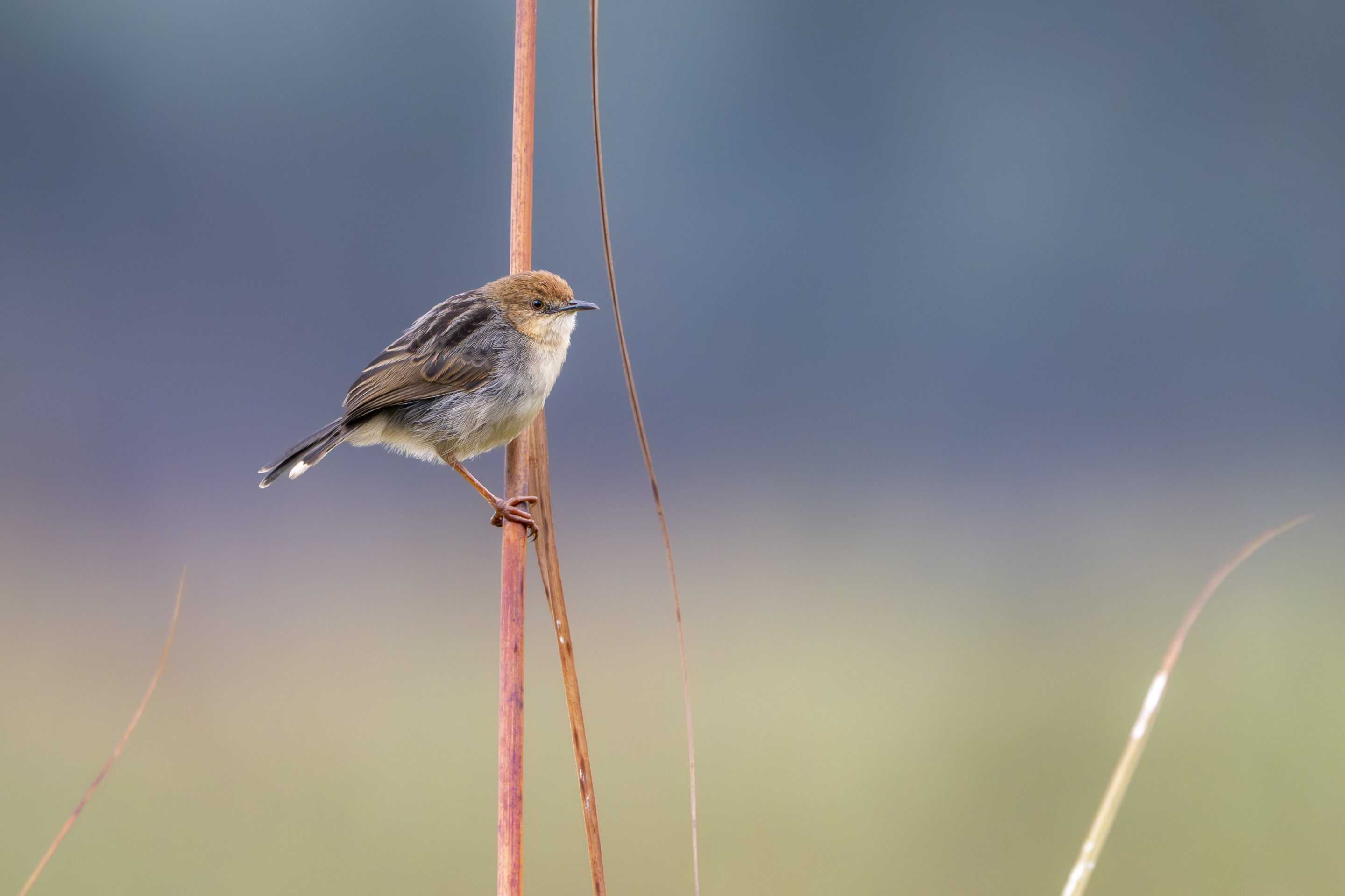
Carruthers’s Cisticola, Bihinga Lake
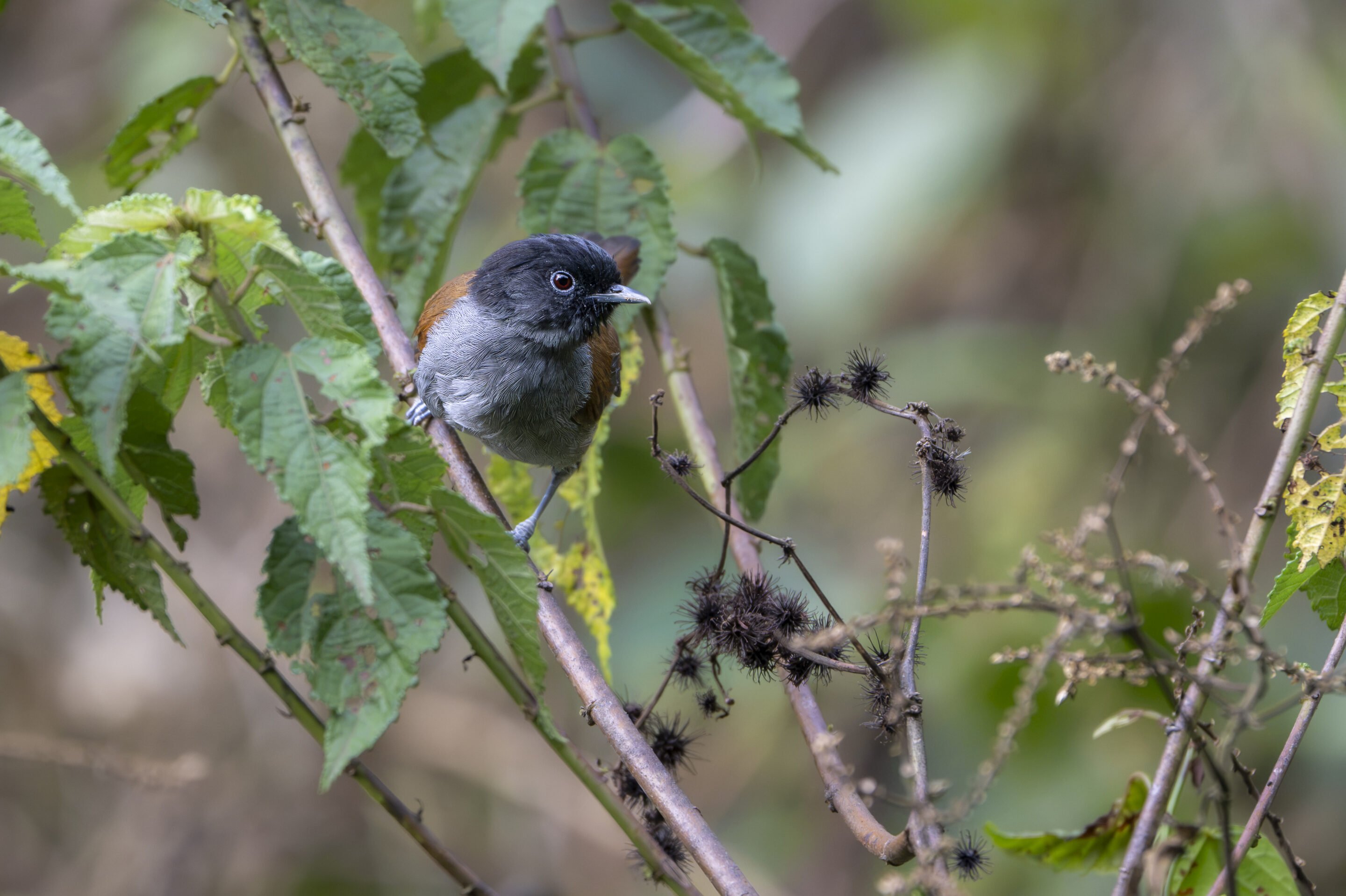
Rwenzori Hill Babbler, Nyungwe NP
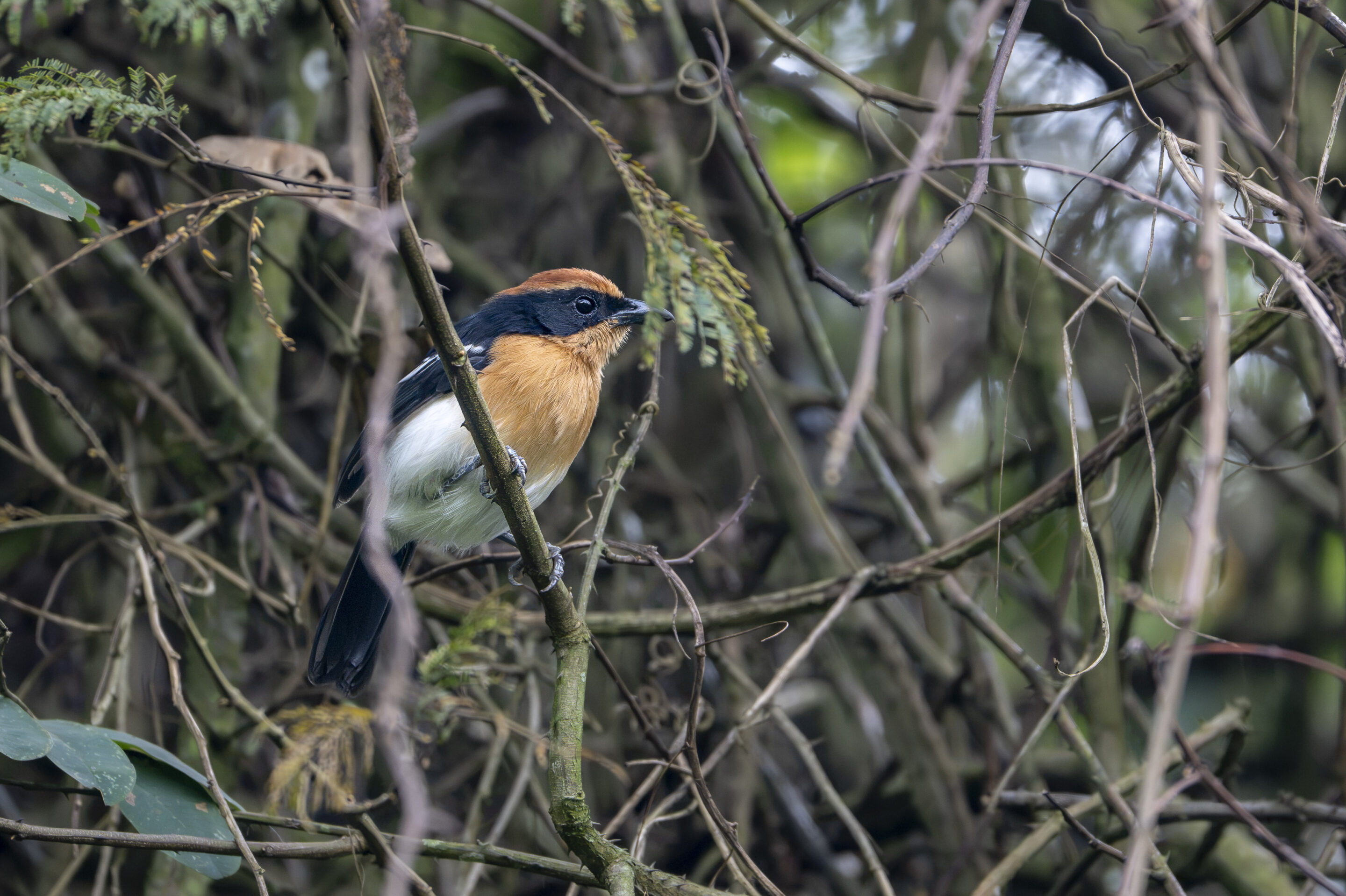
Lühder’s Bushshrike, Nyungwe NP
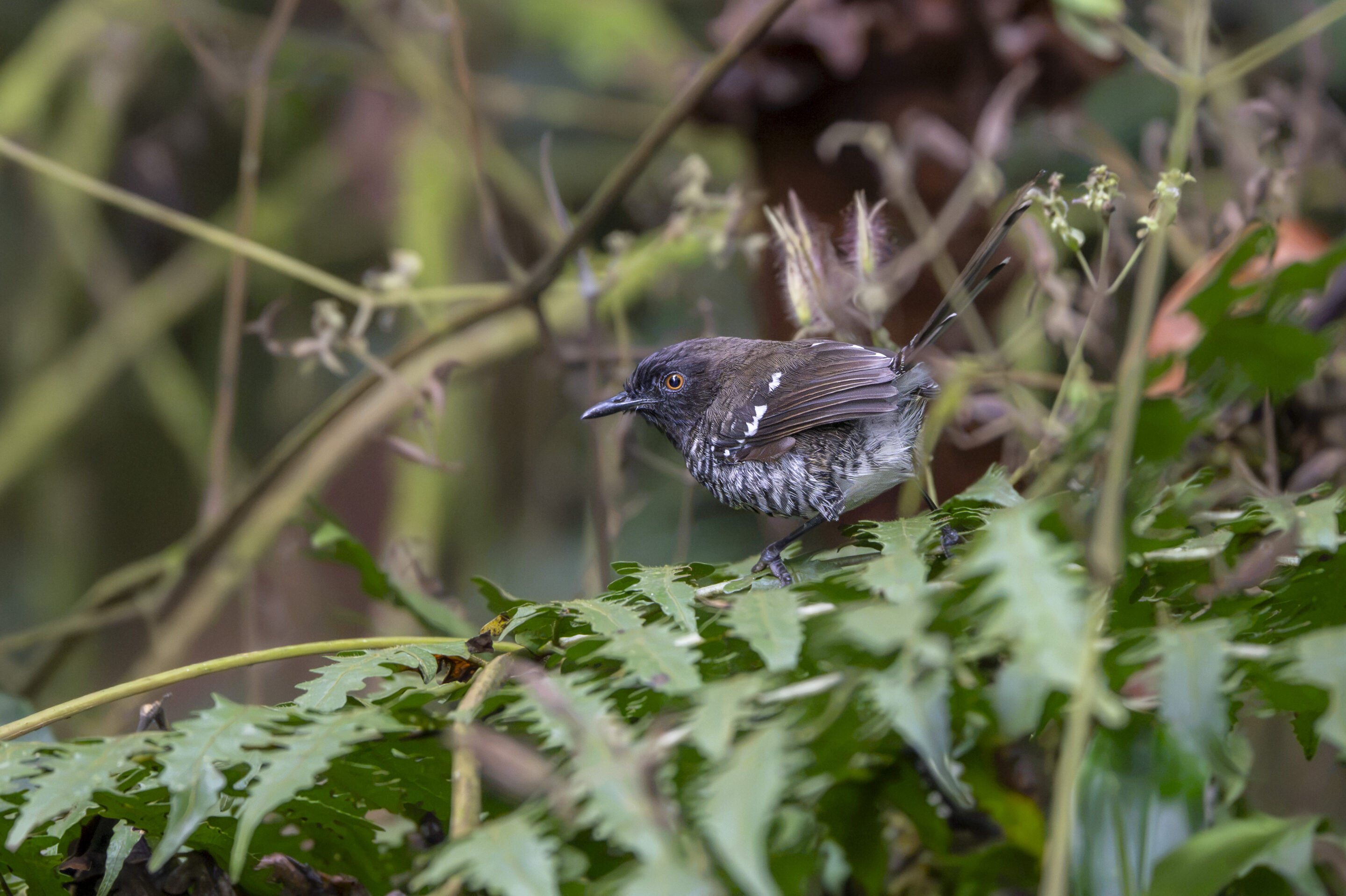
Banded Prinia, Nyungwe NP
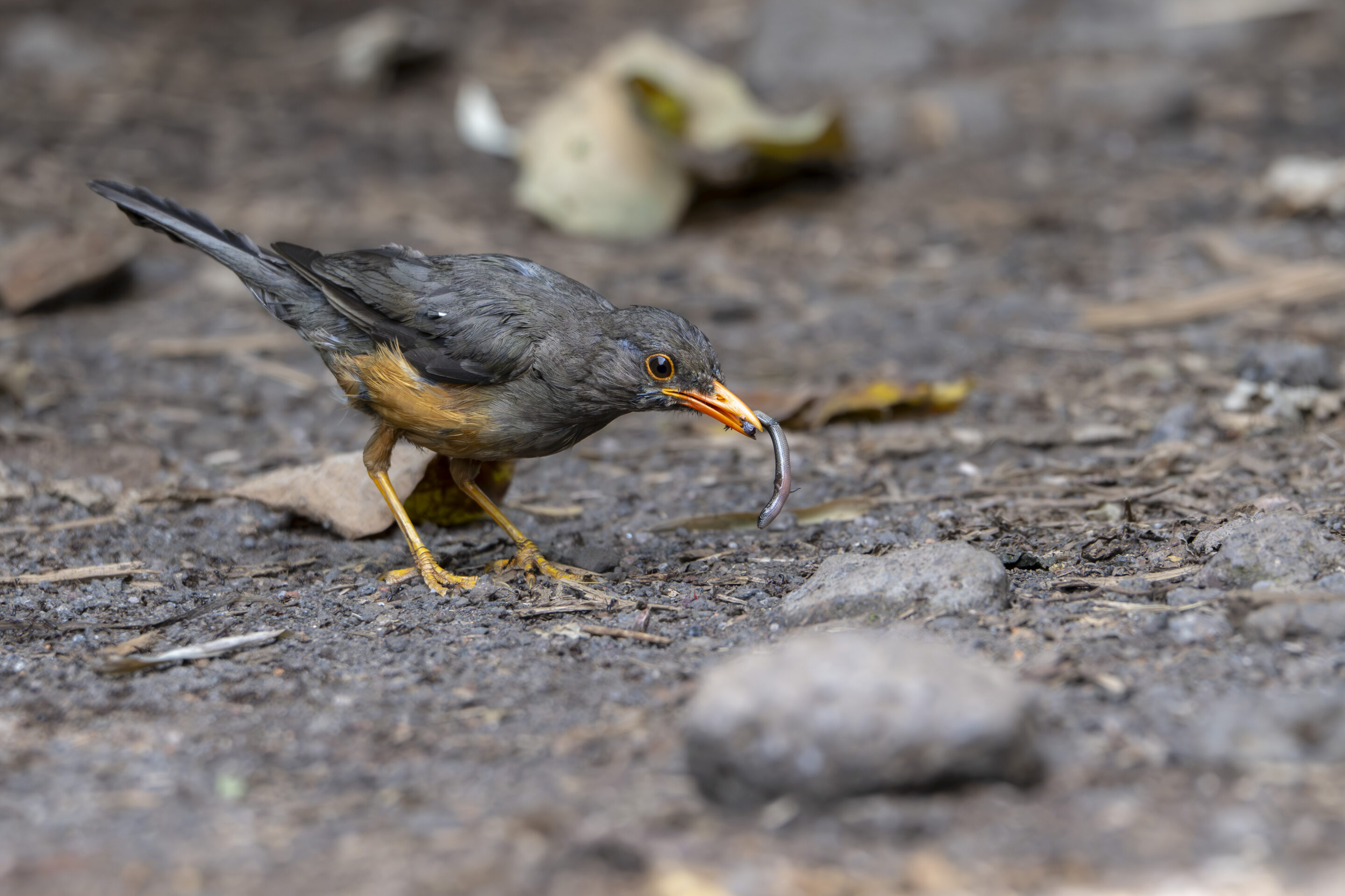
Abyssinian Thrush, Mgahinga Gorilla NP
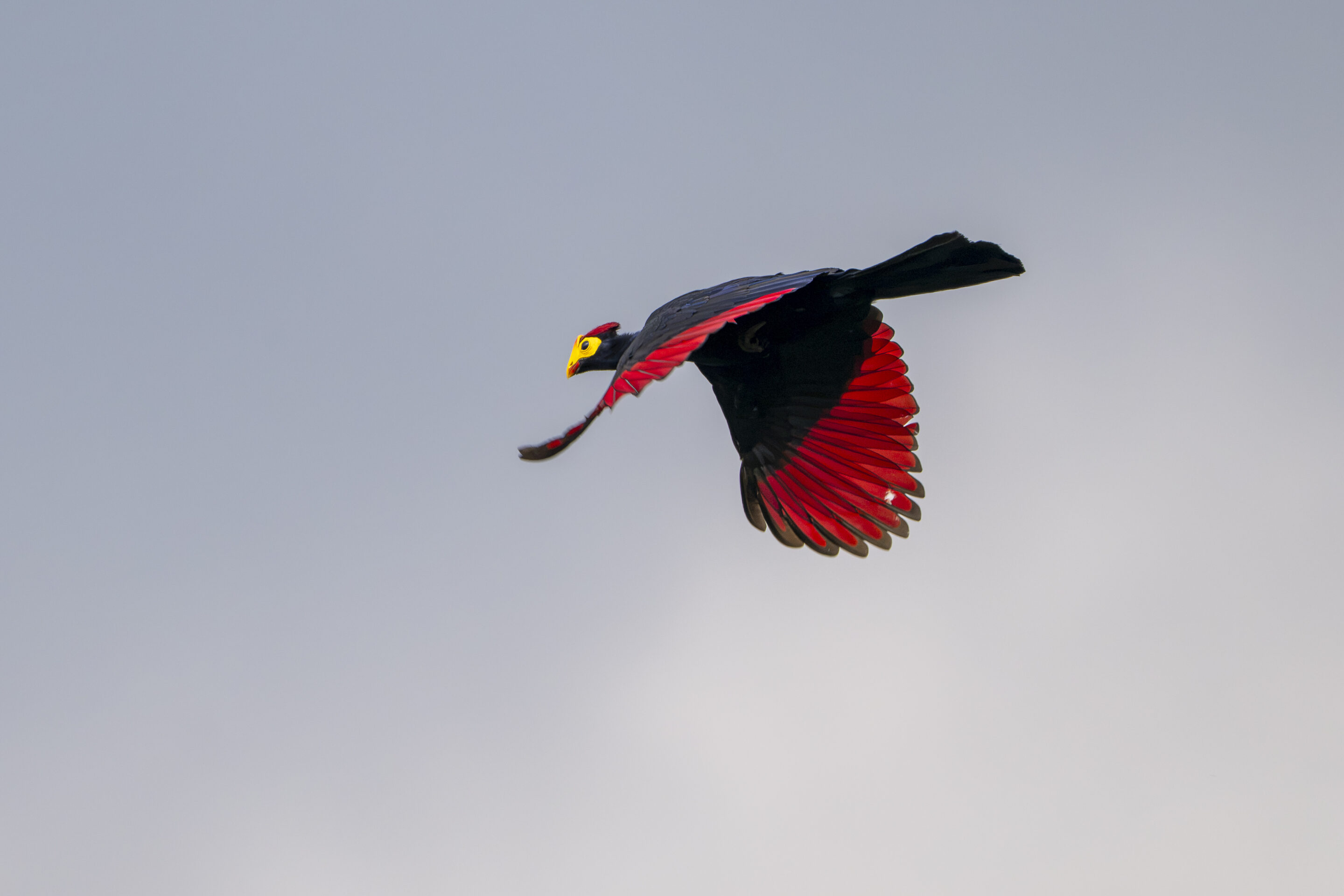
Ross’s Turaco, Nyungwe NP
Useful contacts
| Uganda | Matthew Kajunga (Twongyeyirwe), Cisticola Birding and Nature Safaris+256 788 149712; cisticolabirding@gmail.com |
| Rwanda (Musanze) | Joseph Desire Dufitumukiza (Lionceau), Rugezi Ornithology Centre+250 783 772300; djoseph@rugeziornithology.org |
| Rwanda (Nyungwe NP) | Claver Ntoyinkima, Nyungwe National Park ranger-guide+ 250 725 352510 |