
I visited Mana Pools for the first time 30 years ago, on our cross-Africa journey. We weren’t birding seriously back then – larks and cisticolas weren’t paid much attention - but we set a target of seeing 100 species. A week later, we crawled the last 50 kilometres out of the park, a handful shy of our target, and still hoping to make it. I returned a decade later with the same target, but with only two days, failed again. Would it be third time lucky?
The road to Chirundu on the border with Zambia is in poor condition for long stretches, but charter flights to Mana are bank-breaking. Although just 350 kilometres from Harare’s international airport, it is a six-hour transfer, for those who know the road. Fortunately, this includes an obligatory breakfast stop at Saucy Sue’s. Self-driving would take much longer. The Mana Transfers’ speedboat to Wilderness’s Ruckomechi Camp made for an exhilarating start to our four-night stay.
Mana is a Shona word meaning “four”. It signifies the number of permanent pools pockmarking the floodplain in the park, now a vestige of the old Zambezi River’s course, before it was dammed at Kariba in the late 1950’s.
This 2,500 km2 UNESCO World Heritage site on Zimbabwe’s northern arc of the mighty river offers photographers breathtaking landscapes and awe-inspiring encounters with its high concentrations of wildlife, including over 450 species of birds (in the summer months).
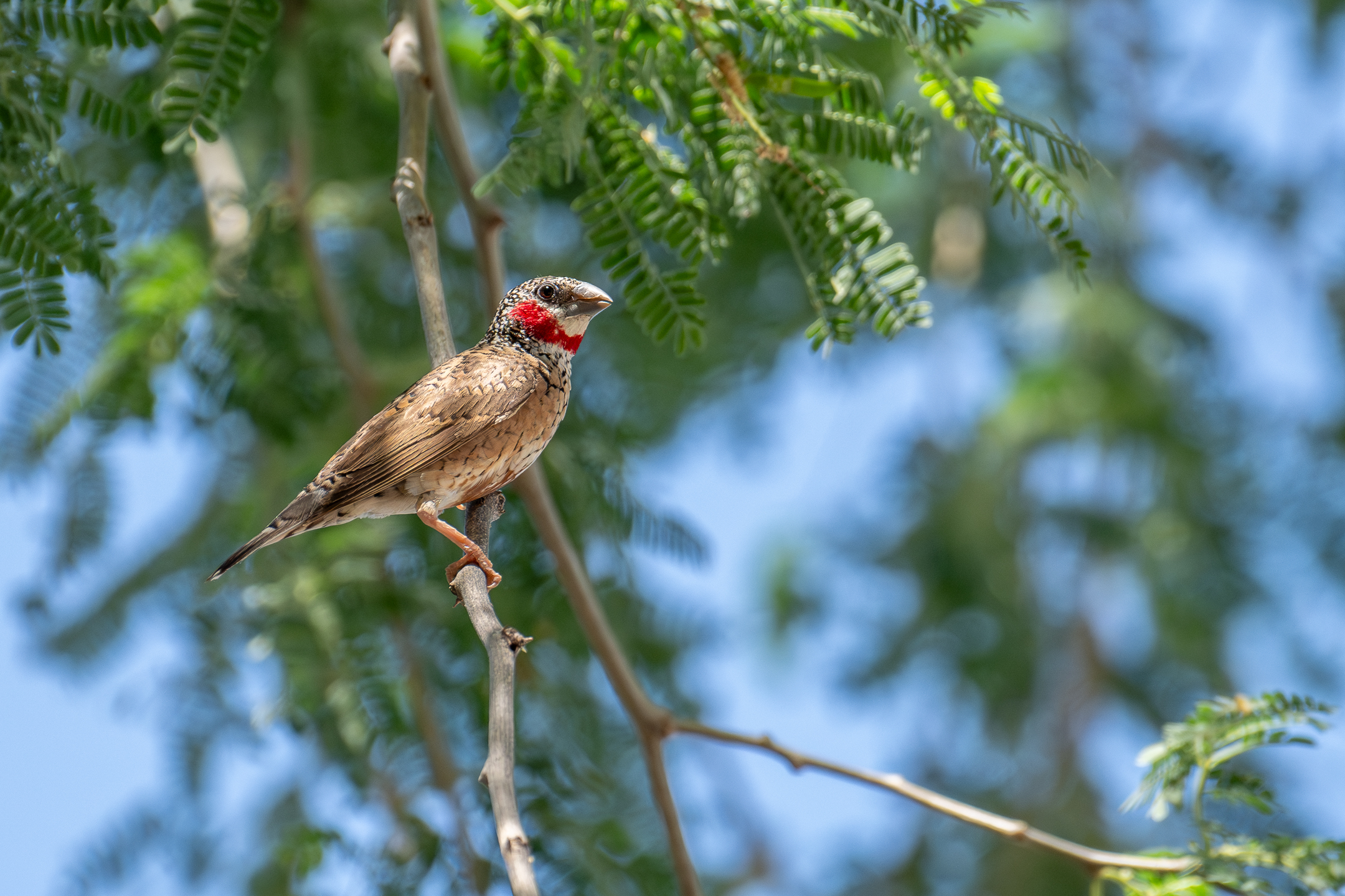
Cut-throat Finch
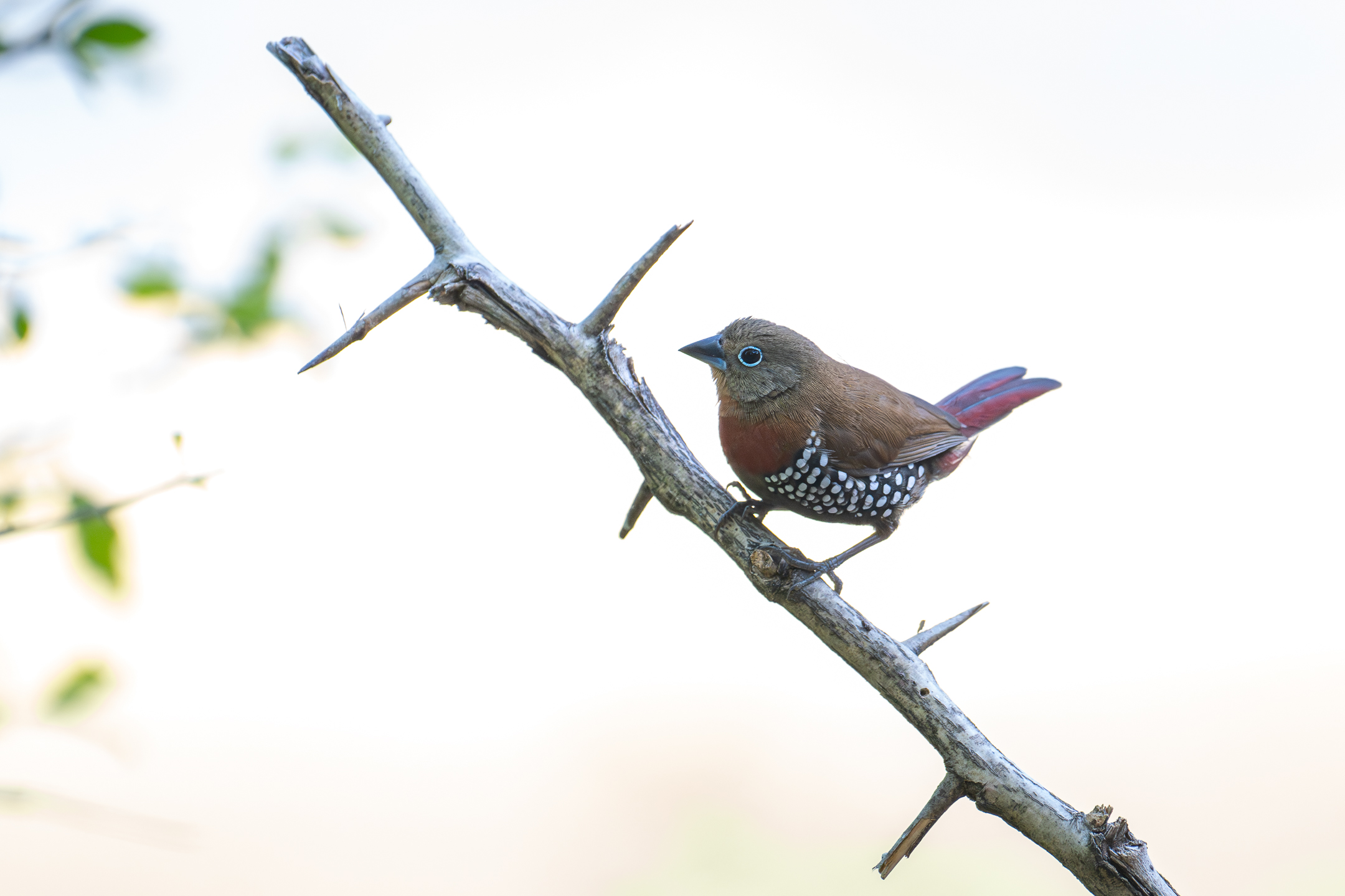
Red-throated Twinspot
Big bull elephants reaching for the pods and branches of the pioneering ana trees (Acacia albidas) are foremost in most photographers’ minds, but the area is also renowned for its healthy populations of lion, leopard, and, with some luck, painted wolves.
High on most birders’ lists will be the area’s harder-to-glimpse specials. Residents include White-backed Night Heron, African Skimmer, Long-toed Lapwing, Pel’s Fishing Owl, African Finfoot, and Western Banded Snake Eagle; migrants include Pennant-winged Nightjar and Rock Pratincole.
But there are also sought-after locally common birds such as Lilian’s Lovebird, Arnot’s Chat, Eastern Nicator and Collared Palm Thrush, which make visiting these strangler-fig-lined floodplains very appealing.
I browsed through my bird guide in anticipation of what I might be able to add to my collection before we set off. It was almost 60-birds long. (Realising my goal to photograph 1,001 African birds has a few years still to go!) Winter’s arrival had trimmed the number a little. I couldn’t decide if that was a good thing. Lifers included Three-banded Courser, Thick-billed Cuckoo, Stuhlmann’s Francolin, Ayres’s Hawk-Eagle, Green-backed Honeybird, Böhm’s Spinetail and Grey-headed Parrot.
We had the great pleasure of being guided by one of the nicest and most knowledgeable guides I’ve ever met. If there was anything Kingsley didn’t know about the fauna and flora of the region, he would have learnt it by the next drive. A passionate, eloquent, and entertaining gentleman.
Tambourine Dove, Black and Goliath Heron, White-crowned Lapwing and 23 others were listed before we arrived at the camp. Red-necked Falcon and African Palm Swift in the ilala palms took us to 41 on that first day.
A pair of resident African Goshawks would greet us in the mornings with their characteristic squeaks. The early drive would show off colourful Lilian’s Lovebirds, Red-throated Twinspot, Orange-breasted Bushshrike and local sunbirds (Amethyst and Scarlet-chested). Kingsley knew that nearby Little Ruckomechi Camp hosted a resident Collared Palm Thrush, which I hadn’t been able to capture in Vic Falls or the Linyanti. We also had an unusually confiding Eastern Nicator there. Two cherished PlusOnes for the morning.
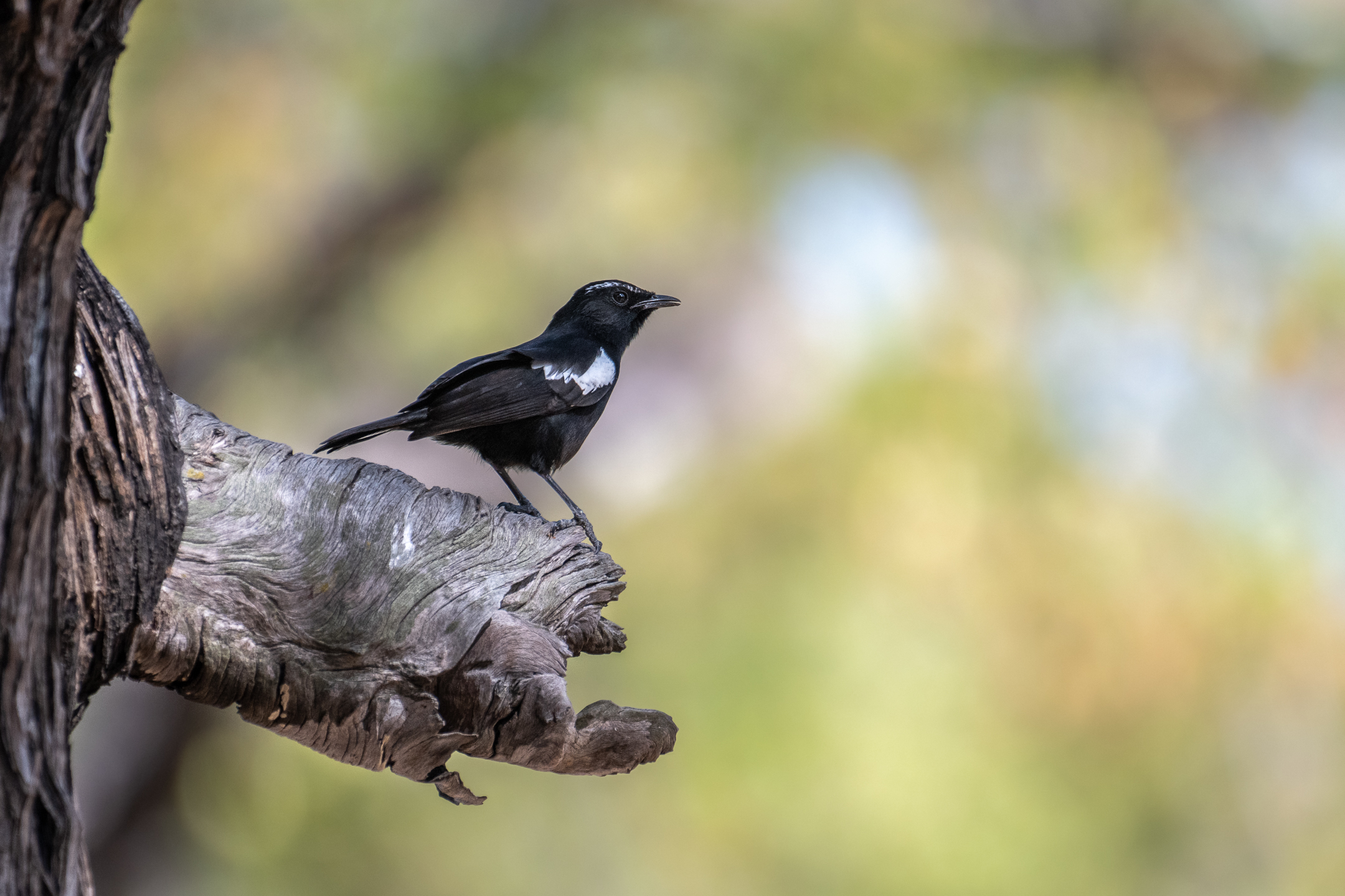
Arnot’s Chat
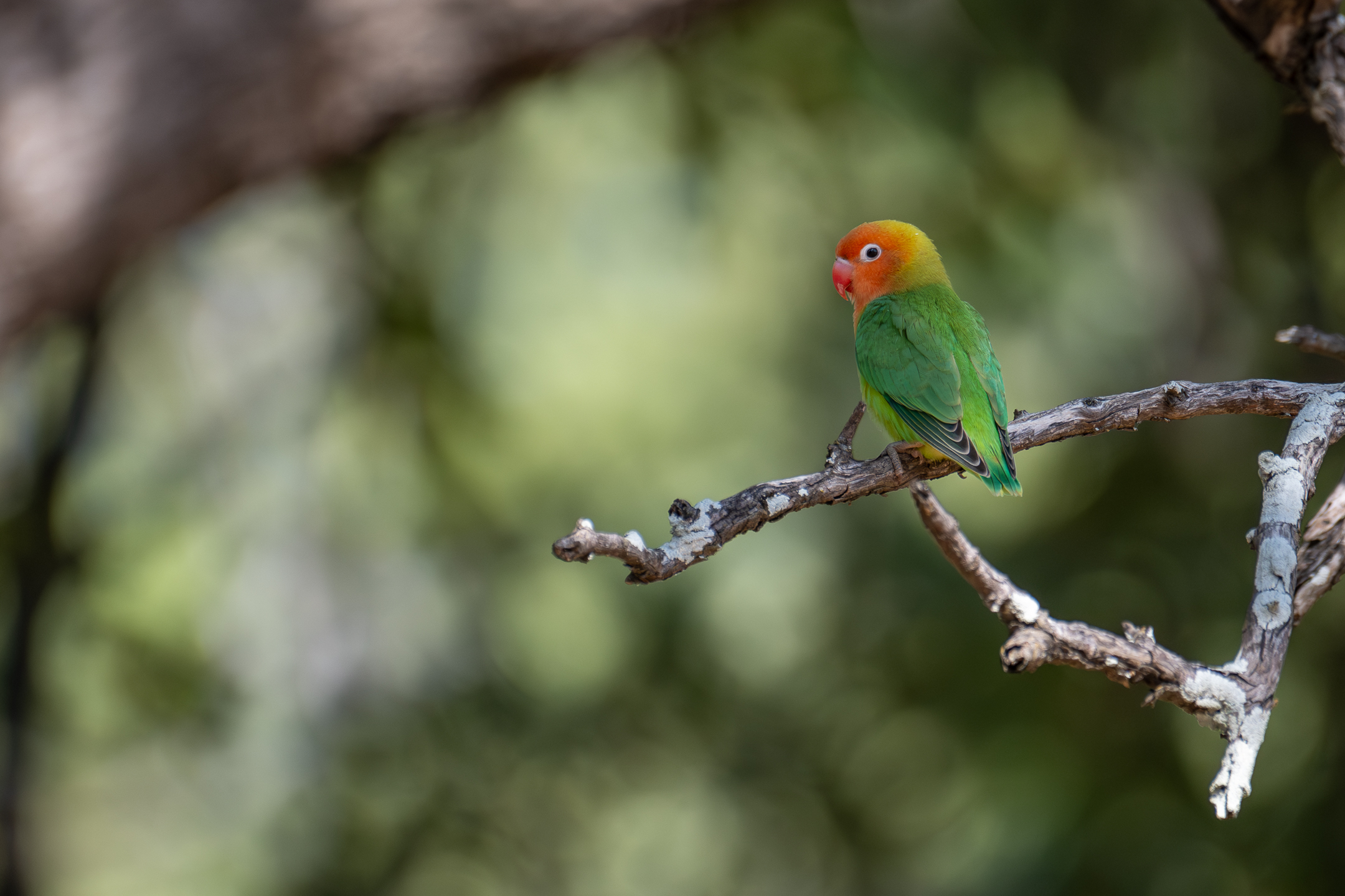
Lilian’s Lovebird
A third PlusOne presented itself back at the main camp after lunch – a pair of Cut-throat Finches whose nests had been raided the day before by a Grey-headed Bushshrike. African Paradise Flycatcher is always a treat, as were Verreaux’s Eagle-Owl, Martial Eagle, and a juvenile African Cuckoo-Hawk, which required some concerted identifying.
We set off to the national park’s headquarters on day 3 with 86 species on our list. I mentioned wanting to improve my images of Arnot’s Chat and Kingsley knew of a family in the mature mopane forest en route. We stopped for coffee there and I was able to get some lovely images. We saw the Long-toed Lapwing at one of the pools and had a flock of Böhm’s Spinetail and a very approachable Wire-tailed Swallow on the river later that afternoon. Red-billed Firefinches were everywhere. A Square-tailed Nightjar in camp before bed had us at 99 before day 4. We were going to make 100.
Day 4 added Trumpeter Hornbill, Yellow-bellied Greenbul, Village Indigobird, Giant Kingfisher, Black Crake, Lesser Honeyguide, Purple Heron and a flock of seven Southern Ground Hornbill. I’d never seen that many together before.
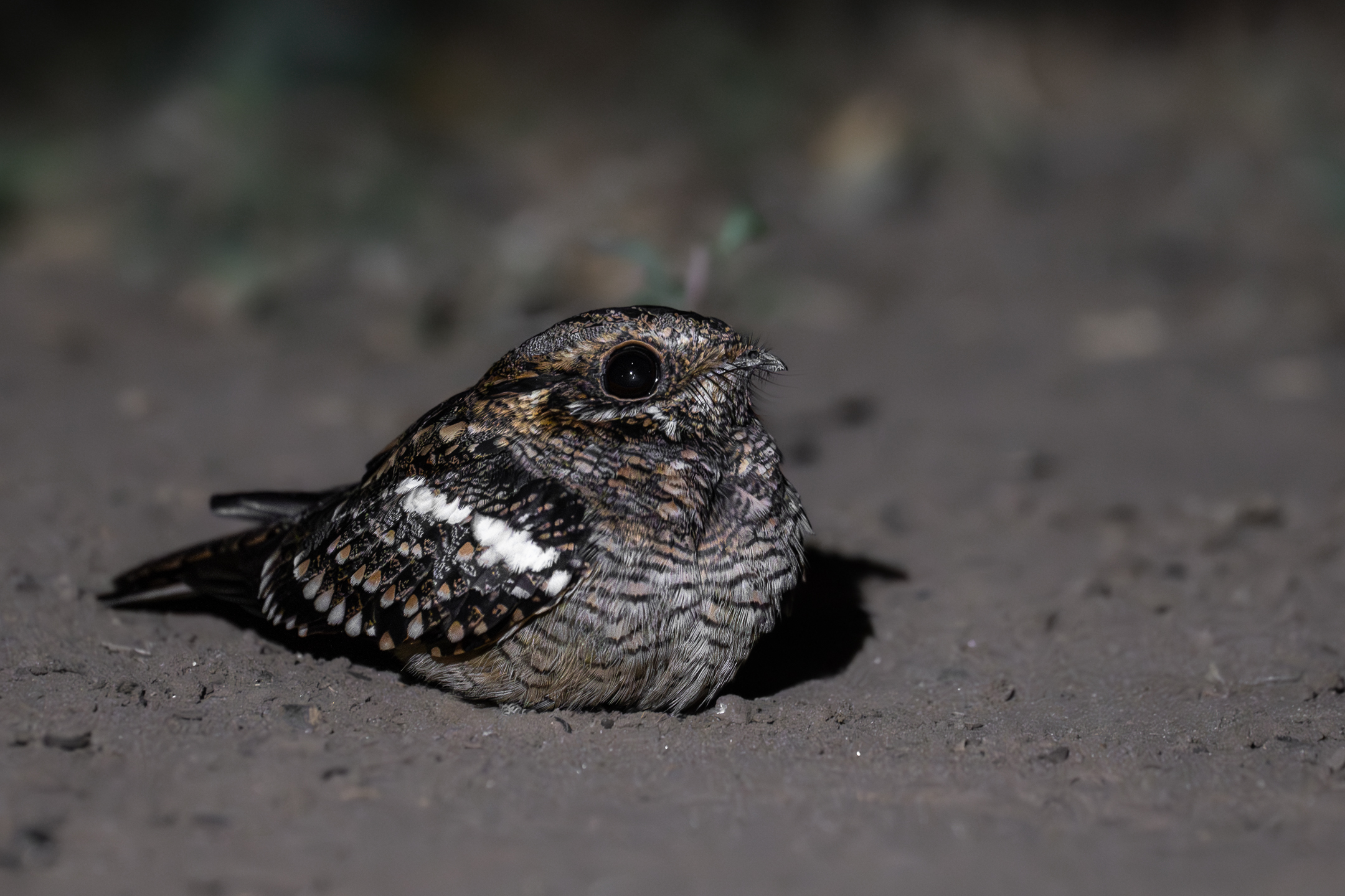
Square-tailed Nightjar
Our last addition, on the way back to Chirundu by boat, was a Striated Heron, taking us to 115. So, if you have four days and you count the cisticolas, 100 should be a breeze. But that doesn’t mean I’m not going back.
Mana Pools is a must-visit for birders and wildlife enthusiasts alike. Remote and rugged, the vast river valley and the wild animal populations it hosts, provides a vital refuge in this spectacularly beautiful part of Southern Africa.